Most people trying to get healthier hit the same wall: they work hard for weeks, then have no idea if any of it is actually working. Knowing how to track health progress is not just motivating. It is the difference between making real changes and spinning your wheels with good intentions. The problem is rarely effort. It is measurement. You cannot adjust what you cannot see. This guide gives you the exact metrics, tools, and habits you need to monitor health changes with confidence and use your data to make smarter decisions about your body and your longevity.
Table of Contents
- Key takeaways
- How to track health progress: the metrics that actually matter
- Tools and methods to capture your data
- Best practices for consistent, reliable tracking
- How to interpret data and make smarter adjustments
- My honest take on what tracking actually changes
- Take your tracking further with personalized support
- FAQ
Key takeaways
| Point | Details |
|---|---|
| Track more than weight | Monitor body composition, blood markers, energy, and mood for a complete health picture. |
| Standardize your measurements | Same time, same conditions, every time. Consistency turns raw data into reliable trends. |
| Use passive tools to stay consistent | Wearables and synced apps reduce the daily burden of data collection significantly. |
| Read trends, not daily numbers | Multi-week averages reveal true progress. Single-day fluctuations are mostly noise. |
| Pair self-tracking with medical guidance | Sharing your data with a physician unlocks insights you cannot get from apps alone. |
How to track health progress: the metrics that actually matter
Most adults focus exclusively on the scale. That is a mistake. Your weight is one data point out of dozens that describe how healthy you actually are. Adults should monitor 8 core metrics including weight, inflammation markers, cholesterol, blood sugar, blood pressure, and kidney and liver function, with annual check-ins at minimum.
Beyond those blood-based markers, your body composition tells a story the scale never can. For adults 45 and older, visceral fat, skeletal muscle mass, and bone density are the three metrics most predictive of long-term healthspan. Strength training, diet quality, and impact-loading activities affect each of these differently, which means you need to track them separately to know what is working.
Here is a breakdown of the core categories to track:
- Body composition: Visceral fat percentage, skeletal muscle mass, body fat percentage, bone density
- Cardiovascular markers: Resting heart rate, blood pressure, cholesterol (LDL, HDL, triglycerides)
- Metabolic markers: Fasting glucose, HbA1c, insulin sensitivity
- Organ health: Kidney function (creatinine), liver enzymes (ALT, AST), complete blood count for anemia screening
- Performance metrics: Strength benchmarks, aerobic capacity, flexibility, recovery speed
Numbers alone are not enough. Non-numerical indicators like mood stability, daily energy levels, clothing fit, and physical strength are vital complements to your data. Tracking these monthly helps you identify meaningful trends without creating daily stress. A good week of sleep, a noticeable lift in energy, or pants that fit differently are real signals of progress that no blood panel captures.
Pro Tip: Learn to monitor body composition separately from overall weight. Two people at the same weight can have vastly different health profiles based on muscle-to-fat ratio alone.
Tools and methods to capture your data
The right tool is the one you will actually use consistently. That said, some tools are genuinely better than others for building a reliable picture of your health over time.

Wearable devices are the most powerful passive tracking option available right now. Smartwatches and fitness trackers provide consistent monitoring of heart rate, sleep quality, and daily activity without requiring you to do anything beyond wearing them. The data variance in consumer wearables is real but manageable. You are looking for trends, not lab-grade precision.
Here are the main categories of tools worth using:
- Wearables (Oura Ring, Apple Watch, Fitbit): Passive tracking of sleep stages, heart rate variability (HRV), activity levels, and resting heart rate
- Smart scales: Body fat percentage, muscle mass estimates, and hydration levels synced automatically to an app
- Blood glucose monitors: Continuous glucose monitors (CGMs) give real-time feedback on how food, sleep, and stress affect metabolic health
- Health apps and logs: Apps that centralize data from multiple devices into one dashboard for trend analysis; platforms like HealthLog enable tracking of complex interactions across devices and tests over time
- Progress photos and measurements: Taken monthly under identical lighting and conditions. Surprisingly powerful when combined with body comp data
- Fitness journals: Written or digital logs of workouts, personal records, and recovery notes
Automated syncing devices reduce active tracking effort dramatically. Most people maintaining consistent data collection spend an average of just 5 to 10 minutes per day on active attention.
Pro Tip: Sync all your wearable data, health app logs, and manual entries into a single platform weekly. Fragmented data across five different apps makes trend analysis nearly impossible.
Best practices for consistent, reliable tracking
The biggest mistake most people make is measuring inconsistently and then wondering why their data looks chaotic. Reliable tracking comes down to standardization.
Follow this sequence to set up habits that actually hold:
- Pick fixed measurement times. Weigh yourself every morning after using the bathroom, before eating. Take blood pressure seated, after five minutes of rest. Use the same conditions every time without exception.
- Set appropriate tracking frequencies. Check mood and energy daily (a quick 1-10 rating takes 10 seconds). Weigh yourself weekly and average the numbers. Take body measurements and progress photos monthly.
- Track trends across multiple weeks. Multi-week averages produce more reliable health progress insights than any single measurement. A single bad weigh-in after a high-sodium dinner is noise. Three weeks of rising scale numbers is a signal.
- Reframe plateaus as data, not failure. Plateaus in fitness metrics are adaptive signals. They indicate your body has adjusted to your current routine. That is physiology doing its job, not your effort failing. The right response is variation, not panic.
- Balance numbers with subjective check-ins. Once a week, rate your sleep quality, stress level, and physical energy. These subjective scores often predict upcoming shifts in your objective data before the numbers move.
Tracking is not about perfect measurement. It is about collecting enough consistent signal over time to see where your body is trending and making informed choices before small problems become big ones.
Pro Tip: If daily tracking starts to feel compulsive or anxiety-inducing, scale back to weekly weigh-ins and monthly body measurements. The goal is awareness, not obsession. Burnout from over-tracking is a real and common problem.
How to interpret data and make smarter adjustments
Collecting data is only half the work. Reading it correctly is where most people get stuck. Here is how to turn your numbers into decisions.
Heart rate variability (HRV) is one of the most underused metrics in personal health tracking. A declining HRV trend over several days tells you your nervous system is under stress, whether from under-recovery, illness, or overtraining. When HRV drops, you reduce intensity. When it recovers, you push harder. This is one of the clearest evidence-based feedback loops available without a lab.
Blood glucose data from a continuous monitor reveals how your body responds to specific foods, meal timing, and stress. If your post-meal glucose spikes consistently after certain meals, that is an instruction to adjust. You do not need to be diabetic to benefit from this insight.
Use this table to match common data signals to the adjustments they suggest:
| Data signal | What it likely means | Suggested adjustment |
|---|---|---|
| Rising resting heart rate | Under-recovery or illness | Add a rest day, check sleep quality |
| Stalled weight, dropping measurements | Fat loss, muscle gain | Stay the course. Scale is not the full picture |
| Decreasing HRV trend | Accumulated stress or overtraining | Reduce training intensity for 5-7 days |
| Persistent energy drops | Nutritional gap or hormonal shift | Review diet quality, consider lab work |
| Strength plateau over 3+ weeks | Adaptation. Routine needs variation | Change volume, intensity, or exercise selection |
Integrating data streams with AI-driven health records can reveal subtle correlations you would never spot manually. Patterns between sleep quality and glucose, or between stress scores and recovery metrics, only show up when you look at data holistically.
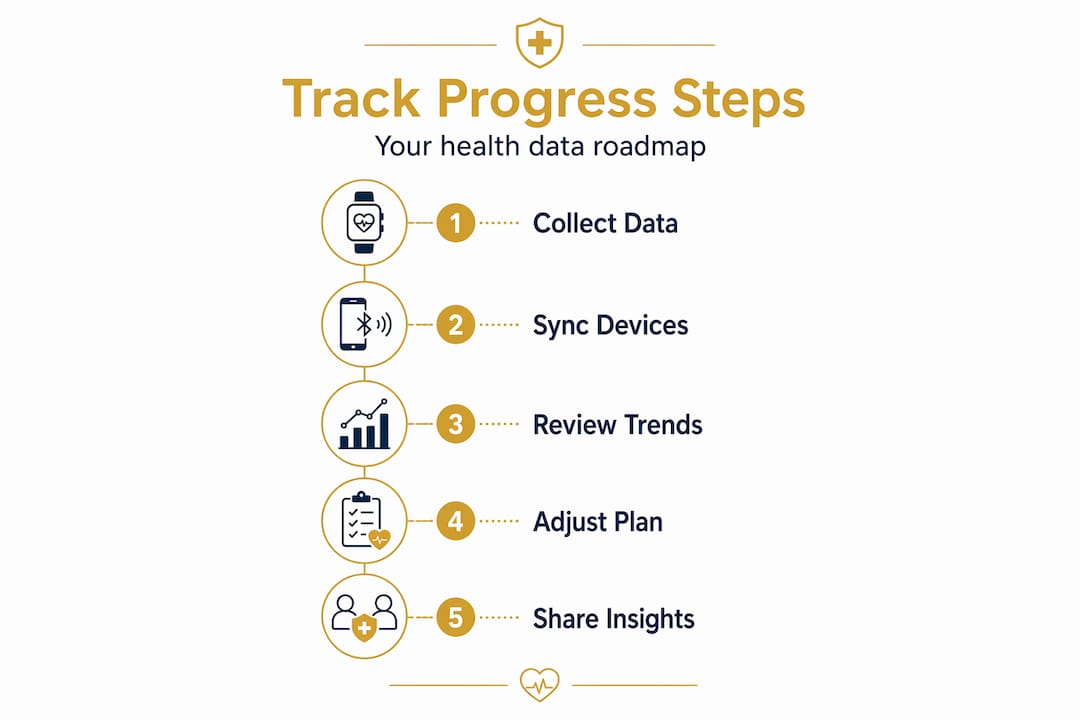
The most important habit is sharing your data with a healthcare provider regularly. Remote patient monitoring enables clinicians to see continuous, timely data that transforms chronic care management. Bringing a 90-day trend report to your doctor visit is far more useful than describing how you have been feeling from memory. Learn more about how physician-supervised telehealth can work alongside your personal tracking for better outcomes.
Avoid data overwhelm by focusing on three to five core metrics at a time. You do not need to track everything. You need to track what is most relevant to your current health goals and review the rest quarterly.
My honest take on what tracking actually changes
I have been paying close attention to health data for long enough to know what shifts when you take it seriously. The moment I stopped reacting to individual numbers and started reading trends, everything got clearer.
The mindset shift that mattered most was thinking of myself as the CEO of my own health. Viewing yourself as the CEO means treating your health data the way a leader treats business metrics. You prioritize long-term trend watching over short-term noise. You make proactive adjustments before small problems compound. And you do not let one bad data point derail a strategy that is working.
What surprised me most was how much passive tracking changed my consistency. When a wearable collects data automatically, you stop debating whether to log something and start actually seeing patterns. That visibility alone is motivating in a way that willpower never is.
The one thing most tracking guides leave out: your data is only as useful as what you do with it. Sitting on months of sleep scores and HRV numbers without ever adjusting your habits is just digital hoarding. The point is the adjustment. Data is the instruction manual. You still have to do the work.
— Roosevelt
Take your tracking further with personalized support
Self-tracking gives you the raw material. Medical expertise tells you what it means and what to do next.
Grownupmeds is built specifically for adults who take their health seriously and want more than generic advice. The platform connects you with licensed physicians who review your data, run targeted lab work, and build protocols around your actual numbers. Whether you are looking at men's vitality optimization to address hormonal shifts showing up in your tracking data, or exploring peptide therapy to support recovery and body composition goals, Grownupmeds pairs your self-collected insights with physician-level interpretation. You can start with a health optimization assessment that translates your symptoms and goals into a personalized protocol. Tracking the numbers is step one. Acting on them with professional guidance is where real change happens.
FAQ
What are the most important metrics to track for health progress?
Start with body weight, body composition, resting heart rate, blood pressure, and fasting glucose. Adults over 45 should also prioritize visceral fat, skeletal muscle mass, and bone density for accurate healthspan measurement.
How often should you check your health progress?
Track mood and energy daily, body weight weekly (averaged over the week), and take body measurements and progress photos monthly. Run full blood panels at least once per year, or more frequently if managing a chronic condition.
What is the best tool for tracking health progress?
A combination works best. A wearable device handles passive daily data collection, a smart scale captures body composition, and a centralized health app ties everything together for trend analysis. No single tool covers all metrics.
Why does my weight fluctuate so much day to day?
Daily weight changes are driven by water retention, sodium intake, hormonal shifts, and digestive contents. They are not fat gain or loss. Focus on weekly averages across multiple weeks to see your real weight trend.
When should I involve a doctor in reviewing my health data?
Bring your tracked data to every check-in, and seek medical guidance any time you notice persistent concerning trends, such as rising resting heart rate, consistent energy drops, or stalled progress despite consistent effort. A physician can interpret patterns that apps cannot.