Physician guidance is defined as trusted medical advice delivered directly by licensed healthcare professionals through in-person visits, telemedicine platforms, or phone-based nurse services. Knowing how to access physician guidance has never been more practical: in 2026, adults can reach a qualified clinician through a video call, a patient portal message, or a government-run nurse advice line without leaving home. The options are real, the barriers are lower than most people assume, and the difference between choosing the right channel and the wrong one can mean faster answers and better outcomes.
How to access physician guidance: what to prepare first
Preparation is the single factor that most determines whether a medical consultation produces useful guidance or vague reassurance. The NIH advises writing questions in advance, being honest about symptoms, and asking your clinician about their preferred communication method. That last point matters more than most patients realize. Some physicians respond fastest through a patient portal message; others prefer a scheduled call. Knowing this before you reach out saves days.
Before any appointment, gather the following:
- A written list of your current medications, including dosages and how long you have been taking them
- A symptom timeline: when symptoms started, what makes them better or worse, and any patterns you have noticed
- Your relevant medical history, including past diagnoses, surgeries, and allergies
- Contact information for any specialists you currently see
- A trusted friend or family member who can attend or listen in, particularly for complex or emotionally difficult consultations
Technology readiness matters just as much for virtual visits. The Merck Manual recommends testing your internet connection, confirming your device has a working camera and microphone, and identifying a quiet, well-lit space before the appointment starts. If your connection fails, most platforms allow a fallback to audio-only. That fallback is not ideal, but it is far better than a missed consultation.
Pro Tip: Ask your physician's office, before your appointment, whether they prefer questions submitted through a patient portal in advance. Many clinicians will review them and arrive better prepared, which compresses the time you spend explaining and expands the time you spend getting answers.
How does telemedicine work for remote physician consultations?
Telemedicine is not a single service. It is three distinct formats, each suited to different needs. Mayo Clinic identifies messaging, video-to-home visits, and video-at-clinic visits as the three primary virtual care types. Messaging typically generates a clinician response within 24 hours and works well for prescription refills, lab result questions, and minor follow-ups. Video-to-home visits handle a wider range of concerns, including rashes, respiratory symptoms, and mental health check-ins. Video-at-clinic visits, where you attend a local facility but connect remotely with a specialist, cover more complex cases that still benefit from some on-site support.
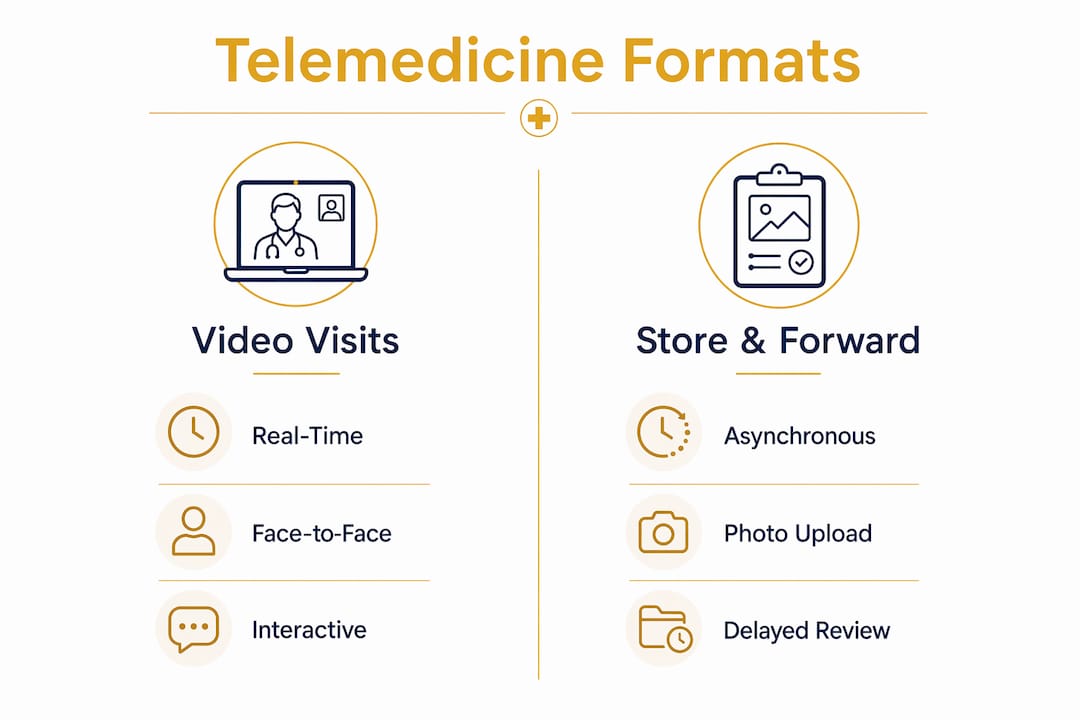
Getting the most from a video visit requires the same discipline as a clinical handoff. Scripps Health advises patients to provide medication names and symptom timelines with specific start dates, current vital signs if measurable, and targeted questions rather than open-ended complaints. A clinician who receives this level of detail can form a working diagnosis faster and with greater confidence. Vague descriptions produce vague guidance.
Here is a practical sequence for preparing a telemedicine visit:
- Confirm the platform your provider uses (Teladoc, Doxy.me, or your insurer's portal) and create an account at least 24 hours before the visit
- Test your camera, microphone, and internet speed on the same device you plan to use
- Write out your symptom timeline with specific dates and any triggering events
- Take and upload photos of visible symptoms, such as skin conditions or swelling, before the call starts
- Have your medication list, insurance card, and pharmacy details accessible during the visit
- Prepare two or three specific questions rather than a general description of feeling unwell
Telemedicine does have firm limits. The Merck Manual states clearly that telemedicine cannot replace a physical exam, and clinicians will recommend an in-person visit when one is warranted. Conditions requiring auscultation, palpation, or direct observation of reflexes cannot be fully assessed remotely. Recognizing this boundary early prevents frustration and delays.
Pro Tip: Upload photos of visible symptoms directly to your patient portal before the video call starts. Clinicians who can review images in advance arrive at the consultation with a sharper clinical picture, which means your appointment time goes toward treatment rather than description.
What are nurse advice lines and when should you use them?
Nurse advice lines are free, 24/7 telephone services staffed by registered nurses who assess symptoms, provide health information, and direct callers to the appropriate level of care. The Australian Government's 1800MEDICARE service and the U.S. Defense Health Agency's MHS Nurse Advice Line, operated through TRICARE, are two well-established examples. Both offer access via phone, live chat, and in some cases video, at no cost to eligible users.
These services function as triage tools, not treatment providers. Their primary value is in answering the question most patients struggle with: do I need to go to the emergency room, schedule a GP appointment, or manage this at home? The Australian Department of Health frames nurse advice lines explicitly as a mechanism for steering urgent cases to the right care level while preventing unnecessary emergency department visits. That framing is accurate and useful.
Nurse advice lines are not a substitute for physician consultation. They are a decision-support tool that helps you determine which type of physician consultation you actually need, and when.
What to expect from a nurse advice line call:
- A structured symptom assessment using standardized clinical protocols
- Clear guidance on urgency: manage at home, see a GP within 24 to 48 hours, or go to an emergency department now
- Basic self-care instructions for mild conditions
- Referrals to local services or telehealth platforms when appropriate
- No prescriptions, diagnoses, or treatment plans
Nurse lines are particularly valuable for parents assessing children's symptoms overnight, adults managing chronic conditions who notice a new development, and anyone uncertain whether a symptom warrants immediate attention. They reduce the cognitive load of a high-stakes decision by replacing guesswork with clinical protocol.
Comparing your options: which access method fits your situation?
Choosing the right channel for accessing medical advice depends on three variables: urgency, condition complexity, and your available technology. No single method is universally superior.
| Access method | Best for | Key limitation |
|---|---|---|
| In-person visit | Complex conditions, physical exams, new diagnoses | Scheduling delays, travel required |
| Telemedicine video visit | Respiratory symptoms, skin conditions, mental health, follow-ups | Cannot replace physical exam |
| Nurse advice line | Triage decisions, overnight symptom assessment, mild urgent concerns | No prescriptions or diagnoses |
| Patient portal messaging | Prescription refills, lab questions, non-urgent follow-ups | Response time up to 24 hours |
| Online doctor service | Mild ailments, convenience-driven consultations | No physical exams or records access |
The Helsenorge municipal online doctor model illustrates both the promise and the ceiling of online-only services. Video appointments work well for mild ailments, but the absence of physical exam capability and patient record access creates real diagnostic gaps. That gap matters most for patients with complex histories or conditions that require context from prior visits.
Escalation from virtual to in-person care is not a failure. It is the system working correctly. A telemedicine clinician who identifies a potential cardiac arrhythmia from your symptom description and routes you to an emergency department has delivered excellent guidance, even though the virtual visit produced no treatment. Recognizing escalation as a feature rather than a flaw changes how you evaluate remote care.
Pro Tip: For any condition involving chest pain, neurological symptoms, or significant changes in a chronic condition, start with a nurse advice line rather than a patient portal message. Nurse lines are staffed around the clock and can assess urgency in real time, while portal messages may sit unread for hours.
Understanding physician-guided therapy as a broader framework helps you see these access methods as complementary rather than competing. The goal is always the same: getting qualified clinical input matched to your specific situation.
Key takeaways
Effective physician guidance access requires matching your access method to your condition's urgency, complexity, and your available technology.
| Point | Details |
|---|---|
| Prepare before every consultation | Write symptom timelines, medication lists, and specific questions before any appointment. |
| Match method to urgency | Use nurse lines for triage, telemedicine for moderate concerns, and in-person visits for complex evaluations. |
| Telemedicine has firm limits | Physical exams cannot be replicated remotely; expect escalation recommendations for complex cases. |
| Nurse lines prevent wasted visits | Free 24/7 triage services direct you to the right care level before you commit to an ER or urgent care. |
| Upload data before video visits | Sharing photos and records in advance improves diagnostic accuracy and shortens appointment time. |
What I've learned about getting real value from physician consultations
Roosevelt here. After years of writing about healthcare access and watching how people actually use the system, one pattern stands out above everything else: preparation separates patients who leave consultations with clarity from those who leave with a follow-up appointment and no answers.
Most adults treat a doctor's appointment like a conversation they will figure out as they go. That approach works fine for simple issues, but it fails consistently for anything involving multiple symptoms, a chronic condition, or a request for a specific treatment. Clinicians operate under time pressure. A patient who arrives with a written symptom timeline and two specific questions gets a fundamentally different quality of interaction than one who says "I've just been feeling off."
Telemedicine has genuinely expanded access for people who previously had to choose between taking half a day off work and ignoring a health concern. I think that is a real and underappreciated shift. But I also see people using it as a first resort for conditions that genuinely need a physical exam, then feeling let down when the clinician can only offer partial guidance. The fix is not to distrust telemedicine. It is to understand what it can and cannot do before you book the visit.
Nurse advice lines remain the most underused resource in the entire system. Most people do not know they exist. The ones who do use them consistently report that a ten-minute call saved them a three-hour emergency room wait. That is not a small thing. If you have not saved your insurer's nurse line number in your phone, do it today.
The broader point is this: physician guidance is not something that happens to you. It is something you participate in actively. The patients who get the most from every consultation, whether in-person, virtual, or by phone, are the ones who show up prepared, communicate clearly, and know which channel fits their situation.
— Roosevelt
Physician-supervised health optimization with Grownupmeds
If you are looking for physician guidance that goes beyond reactive care, Grownupmeds offers physician-supervised telehealth protocols designed for adults focused on health optimization, weight management, and longevity. The platform connects you with licensed physicians who build personalized treatment plans across services including peptide therapy and NAD therapy. Every protocol is grounded in clinical evidence, delivered through a secure telehealth process, and supported by U.S.-based pharmacies. Start with a health assessment to see which physician-guided programs align with your goals.
FAQ
What does physician guidance actually mean?
Physician guidance is medical advice, assessment, and direction provided by a licensed physician or qualified clinician. It can be delivered in person, through telemedicine video visits, patient portal messages, or phone consultations.
How do I find a physician for telemedicine consultations?
Most health insurers offer a telehealth portal with a directory of participating physicians. Platforms like Teladoc also provide on-demand access to licensed clinicians without a prior relationship required.
When should I use a nurse advice line instead of calling my doctor?
Use a nurse advice line when you need immediate triage guidance outside of office hours, or when you are unsure whether your symptoms require urgent care. These services operate 24/7 and use clinical protocols to assess urgency in real time.
Can online doctor services access my medical records?
Many online-only doctor services cannot access your existing medical records or perform physical exams, as noted by Helsenorge's online doctor model. For conditions requiring clinical context from prior visits, an in-person or established-provider telemedicine visit is more appropriate.
What information should I bring to a virtual doctor visit?
Scripps Health recommends providing your medication names and dosages, a symptom timeline with specific dates, current vital signs if available, and any photos of visible symptoms uploaded in advance.