Most people assume age management medicine means hormone shots and anti-aging creams. That assumption sells it short by about a decade of science. What is age management medicine, really? It is a proactive, physician-supervised medical specialty that targets the biological processes behind aging before disease takes hold. Rather than waiting for something to break, this field monitors biomarkers, measures biological age, and intervenes early. This guide breaks down the definition, the science, the most common treatments, and how to tell a credible program from an overhyped one.
Table of Contents
- Key takeaways
- What is age management medicine, defined
- The science of biological age
- Common treatments in age management programs
- How to implement age management medicine
- Risks, red flags, and critical evaluation
- My honest take on age management medicine
- Take the next step with Grownupmeds
- FAQ
Key takeaways
| Point | Details |
|---|---|
| Biological age over chronological | Your body may be physiologically younger or older than your birth year; biomarkers tell you which. |
| Prevention before disease | Age management intervenes on aging mechanisms early, not after diagnosis. |
| Supervision is non-negotiable | Hormone therapies and compounded drugs carry real risks without medical oversight and monitoring. |
| Biomarkers guide treatment | Proteomic and epigenetic clocks quantify aging and direct personalized interventions. |
| Vetting programs matters | Evidence-based, physician-led programs differ significantly from unregulated, marketing-driven services. |
What is age management medicine, defined
Age management medicine is a proactive, preventive medical specialty focused on optimizing healthspan by monitoring biological aging processes and intervening before age-related decline becomes clinical disease. That distinction matters more than most people realize. Conventional medicine is largely reactive. You develop high blood pressure, you get treated for high blood pressure. Age management medicine asks a different question: what biological changes are accumulating right now that will produce disease in ten years, and what can we do about them today?
The field evolved from earlier anti-aging movements and longevity research in the 1990s and early 2000s. Over time, it matured into more rigorous geroscience territory, incorporating evidence-based biomarker assessment, lifestyle medicine, and physician-supervised protocols. The definition of age management today reflects that evolution: it is not about eliminating aging, but about compressing the period of decline and extending the years of full function.
There is a legitimate controversy here worth acknowledging. The term "age management" sits in a space that is still underregulated and contested. Some programs are grounded in solid preventive medicine. Others are essentially concierge marketing operations selling supplements and hormone prescriptions with minimal clinical rigor. The definition means different things depending on who is offering the service.
What age management medicine involves at its core includes:
- Biological age assessment using validated biomarkers rather than birth certificates
- Early lifestyle and metabolic intervention before disease markers appear
- Personalized treatment planning based on an individual's risk profile and physiology
- Ongoing monitoring and adjustment as the body responds to interventions
The science of biological age
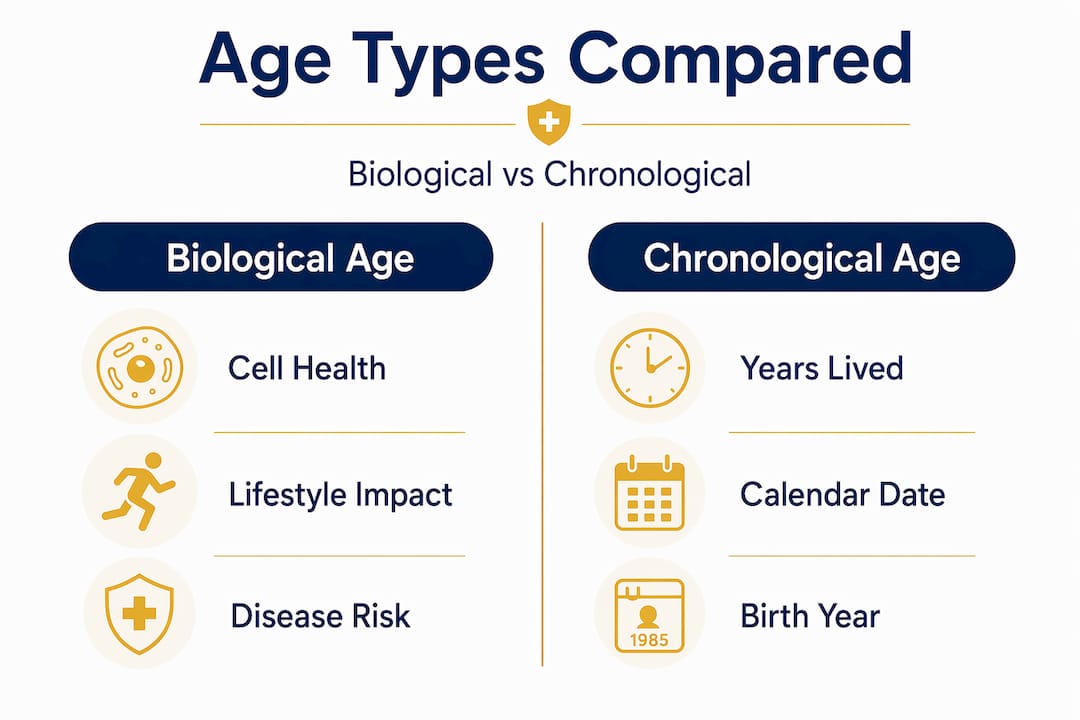
Chronological age tells you how many years you have been alive. Biological age tells you how those years have treated your cells. Biological age correlates with physiological function and lifespan more accurately than chronological age, which is why two 55-year-olds can have radically different health trajectories.
The measurement tools driving this field forward are called aging clocks. The most studied are epigenetic clocks, which track chemical modifications to DNA, and proteomic aging clocks, which analyze patterns in blood proteins. Proteomic aging clocks use blood protein biomarkers to quantify biological age, but they vary widely across platforms and modeling approaches, which limits direct clinical comparison between systems.
This is where geroscience enters the picture. Geroscience studies the biological mechanisms of aging to delay multiple age-related diseases simultaneously by targeting shared processes. Instead of treating heart disease, then diabetes, then cognitive decline as separate problems, geroscience looks at the upstream biological drivers they share, including cellular senescence, mitochondrial dysfunction, and chronic inflammation.
| Biomarker type | What it measures | Clinical limitation |
|---|---|---|
| Epigenetic clock | DNA methylation patterns | Varies by tissue type tested |
| Proteomic clock | Blood protein patterns | Platform inconsistency across labs |
| Metabolomic panel | Metabolic byproducts | Sensitive to short-term lifestyle changes |
| Telomere length | Chromosomal end-cap erosion | High variability, less predictive alone |
The honest caveat: these tools are genuinely useful for guiding preventive decisions, but they are not crystal balls. Aging reflects biological processes unfolding heterogeneously, meaning your liver may age differently than your cardiovascular system. Personalized prevention guided by biomarkers enables more timely interventions than waiting for symptoms, but interpretation requires clinical expertise, not just a lab report.
Common treatments in age management programs
Age management health programs are not monolithic. What they include depends on the provider, the evidence they prioritize, and your individual assessment results. Here is what you are most likely to encounter.
Lifestyle interventions form the foundation of any credible program. Personalized nutrition planning, structured exercise protocols, sleep optimization, and stress management are not glamorous, but they carry the strongest evidence base of any age management practice. These are not optional add-ons around the hormone therapies. They are the framework.

Supplements and nutraceuticals appear in virtually every program. The quality of evidence behind them varies enormously. Some, like vitamin D and omega-3 fatty acids, have solid data. Others are sold with claims that outrun the science. Any program presenting supplements as the primary intervention deserves skepticism.
Hormone therapies are where the benefits of age management get most discussed and most misunderstood. Testosterone therapy for men, for example, carries documented cardiovascular and prostate risks that the FDA continues to scrutinize. Effective therapy requires evaluating indication, baseline risk, dose, formulation, and ongoing monitoring rather than simply restoring a number on a lab panel. Understanding online hormone therapy options and how they work is a useful starting point if you are considering this path.
Emerging modalities include peptide therapy and NAD+ therapy. Peptides are short chains of amino acids that signal various biological processes, including tissue repair and growth hormone secretion. NAD+ (nicotinamide adenine dinucleotide) is a coenzyme central to cellular energy production that declines with age. Both are gaining traction within age management programs, though long-term human trial data remains limited compared to foundational lifestyle interventions.
Pro Tip: Ask any program offering compounded hormone medications which FDA-approved alternatives were considered first. Compounded medications are not FDA-approved and carry risks of inconsistent dosing. Compounding pharmacies have a legitimate role when approved options are genuinely unsuitable, but that call should be made explicitly by a physician, not by default.
The importance of individualized medical supervision cannot be overstated here. Age management practices that skip thorough assessment and jump straight to prescriptions are not practicing medicine at a high level.
How to implement age management medicine
Understanding the definition is one thing. Knowing what an optimized age management workflow actually looks like in practice is where most people get lost. Here is the typical sequence in a credible program.
-
Comprehensive initial assessment. This goes beyond a standard physical. It includes a detailed health history, lifestyle audit, and baseline metabolic panel. A good provider will look at sleep quality, stress markers, body composition, and family history alongside standard labs.
-
Biomarker selection and testing. Not everyone needs every available test. A physician guides you toward the biomarkers most relevant to your risk profile and goals. For some, that means an epigenetic age clock. For others, a deep hormonal panel is the priority. This selection should reflect your individual picture, not a standardized menu.
-
Shared decision-making on treatment. This is where you and your physician weigh the evidence together. What interventions have the strongest data for your specific situation? What are the realistic risks and timelines? A credible provider presents options with honest uncertainty, not guarantees.
-
Implementation and follow-up monitoring. Age management is not a one-time prescription. It requires scheduled follow-up labs, symptom tracking, and willingness to adjust the plan. Treatments that are working show measurable improvement in biomarkers or clinical outcomes. Those that are not working get modified.
-
Choosing a reputable provider. Look for physicians with formal training in preventive or functional medicine, transparent discussion of evidence quality, and no financial incentive to sell you products. The step-by-step hormone balancing guide from Grownupmeds offers a useful framework for understanding what safe optimization looks like in practice.
Pro Tip: Before committing to any age management program, ask for the specific evidence supporting each recommended intervention. "We use cutting-edge protocols" is not an answer. A physician should be able to cite clinical studies or established preventive medicine guidelines for every core treatment in your plan.
Risks, red flags, and critical evaluation
Age management medicine programs vary widely in quality and safety depending on scientific backing, regulatory status, and medical supervision. This is the part most marketing materials skip.
Red flags worth knowing before you sign up for any program:
- Guaranteed results language. No legitimate physician guarantees specific outcomes from hormone therapy or biological age reversal.
- Supplements as the primary product. Programs built around selling proprietary supplement stacks without individualized assessment are product businesses, not medical practices.
- Compounded medications as the default. Compounded drugs are not FDA-approved and carry inconsistent dosing risks. They should be a last resort, not the standard protocol.
- No ongoing monitoring included. Any hormone therapy without scheduled lab follow-up is practicing below the standard of care. The FDA's emphasis on individualized risk management for testosterone replacement makes this explicit.
- Claims that outrun the evidence. Biological age reversal is a promising area of research, not a delivered clinical product in 2026.
The shift toward geroscience principles, targeting fundamental aging mechanisms rather than individual diseases, is where the most credible parts of this field are headed. Programs grounded in that framework are a better bet than those built around a single hormone or supplement protocol.
My honest take on age management medicine
I have watched this field earn credibility through genuinely rigorous science, and I have watched it get exploited by marketing operations that slap "age management" on a testosterone subscription and call it medicine. Both versions exist, and the gap between them is significant.
What I have come to believe is this: the core insight behind age management medicine is correct. Conventional medicine's reactive model leaves too much time on the table. Waiting for a diagnosis before intervening on biological aging processes that have been measurable for years is not optimal care. It is just the historical default.
Where I see patients run into trouble most often is with overhyped hormone therapies that were presented as low-risk and transformative, and turned out to be neither for their specific situation. Testosterone therapy can meaningfully improve vitality, body composition, and quality of life in the right patient with proper monitoring. In the wrong patient without monitoring, it introduces real cardiovascular and hormonal risks.
The biomarker side of this field genuinely excites me. Proteomic and epigenetic aging clocks are not perfect tools yet, but they give physicians a way to move the conversation from "you feel fine" to "here is what your biology is actually doing." That specificity changes what is possible in preventive medicine.
My advice: prioritize programs where a physician reviews your full clinical picture, not just your hormone levels. Demand transparency about evidence quality. And be skeptical of any program where the physician seems more focused on what to prescribe than on whether you actually need it.
— Roosevelt
Take the next step with Grownupmeds
If this overview of age management health principles resonates with where you want to take your health, Grownupmeds offers physician-supervised programs built around exactly this framework. The platform connects you with licensed physicians who review your full health picture before recommending any treatment.

Grownupmeds covers the core pillars of age management medicine: men's vitality and hormone optimization, peptide therapy for recovery and cellular support, and NAD+ therapy for cellular energy and longevity. Every protocol is medically supervised, delivered from US-based pharmacies, and supported with ongoing follow-up. If you are ready to move from curiosity to a personalized plan, start with a comprehensive health assessment and let the data guide what comes next.
FAQ
What is the definition of age management medicine?
Age management medicine is a proactive medical specialty focused on monitoring biological aging processes and intervening early to extend healthspan, before age-related disease develops. It differs from conventional care by targeting the mechanisms of aging rather than treating diseases after they appear.
How does biological age differ from chronological age?
Chronological age is how many years you have lived; biological age reflects how your cells and organs are actually functioning. Biological age measured through biomarkers like proteomic or epigenetic clocks correlates more closely with health outcomes and lifespan than birth year alone.
What does age management medicine involve in terms of treatments?
Age management programs typically include personalized lifestyle protocols, targeted supplementation, hormone therapies where medically indicated, and emerging treatments like peptide therapy and NAD+. All interventions should be grounded in individual biomarker assessment and ongoing physician monitoring.
Are hormone therapies in age management safe?
Hormone therapies carry real risks, including cardiovascular and prostate concerns for testosterone therapy, and require careful evaluation of indication, dose, and formulation. The FDA actively reviews testosterone replacement safety, making physician supervision and regular lab monitoring non-negotiable.
How do I find a credible age management program?
Look for programs led by licensed physicians with training in preventive or functional medicine, transparent discussion of evidence quality, individualized assessment before any prescription, and scheduled follow-up monitoring. Avoid programs that lead with product sales or guarantee specific outcomes.