Your body is running a hormonal negotiation every time you try to lose weight, and willpower is not even at the table. The role of hormones in weight loss goes far deeper than most people realize, because hormones control hunger, fullness, fat storage, and how fast you burn calories at rest. When you cut calories, your body responds by shifting leptin, ghrelin, cortisol, and thyroid hormones in ways specifically designed to make you regain what you lost. Understanding this biology, and working with it through medically supervised strategies, is what separates people who keep weight off from those who cycle through the same 20 pounds for years.
Table of Contents
- Understanding key hormones involved in weight regulation
- How weight loss affects hormone levels and metabolism
- Medical therapies targeting hormones: GLP-1 receptor agonists and their benefits
- Preserving lean mass and managing metabolism during hormone-driven weight loss
- Practical strategies and lifestyle adjustments for hormone-optimized weight loss
- Why understanding hormones transforms weight loss beyond dieting
- Explore medically supervised hormone optimization for lasting weight loss
- Frequently asked questions
Key Takeaways
| Point | Details |
|---|---|
| Hormones regulate weight | Weight loss is controlled by hormones like leptin, ghrelin, and cortisol, not just calories. |
| Dieting triggers hormone shifts | Leptin drops and ghrelin rises after weight loss, increasing hunger and slowing metabolism. |
| GLP-1 therapies aid weight loss | Medications mimicking GLP-1 hormone lead to sustained appetite reduction and fat loss. |
| Preserve muscle effectively | Combining resistance training with hormone therapy helps maintain lean muscle and metabolism. |
| Lifestyle matters deeply | Quality sleep, stress management, and moderate calorie deficits optimize hormonal balance for success. |
Understanding key hormones involved in weight regulation
Your hormones are not passive bystanders in weight management. They are the decision-makers. Brown University Health identifies the key hormones involved in weight regulation as leptin, ghrelin, GLP-1, GIP, and other fullness hormones, insulin, glucagon, cortisol, and thyroid hormones, each playing a distinct role in controlling appetite, energy expenditure, fat storage, and metabolic rate.
Here is what each major hormone actually does:
- Leptin is produced by fat cells and signals your brain that you have enough stored energy. When leptin levels are adequate, your appetite decreases and your metabolism stays active. Think of it as your body's fuel gauge.
- Ghrelin is your hunger hormone. It spikes sharply before meals and drops after eating. When levels stay elevated because of poor sleep or calorie restriction, you feel constantly hungry regardless of how much you eat.
- GLP-1 (glucagon-like peptide-1) is released from the gut after eating. It promotes a feeling of fullness, slows gastric emptying, and reduces the desire to eat. This is the hormone that GLP-1 medications mimic.
- Cortisol rises during psychological stress, poor sleep, and aggressive dieting. Chronically elevated cortisol increases appetite specifically for high-calorie foods and promotes abdominal fat storage.
- Thyroid hormones (T3 and T4) directly regulate your basal metabolic rate (BMR), which is the number of calories you burn just to keep your body running. Low thyroid output means slower fat burning even at rest. Thyroid function and weight loss are tightly linked, and anyone with untreated hypothyroidism will struggle to lose weight through diet alone.
- Insulin manages blood sugar by signaling cells to absorb glucose. When cells stop responding well to insulin, a condition called insulin resistance, the body stores more calories as fat. Insulin's role in fat storage is one of the most clinically relevant hormonal factors in obesity.
- Adiponectin is produced by fat tissue and does the opposite of what most fat-derived hormones do. It improves insulin sensitivity and promotes fat burning. People with more abdominal fat tend to have lower adiponectin levels, creating a cycle that makes further fat loss harder.
For a practical overview of how to start addressing these imbalances, the hormone balancing guide at Grown Up Meds walks through tested, supervised approaches step by step.
With this foundation of hormone functions, you can now understand why those hormones shift during weight loss in ways that actively fight your progress.
How weight loss affects hormone levels and metabolism
Here is the part most diet programs conveniently skip. The moment you start losing weight, your body interprets the calorie deficit as a threat to survival. It responds with hormonal changes that increase hunger, slow metabolism, and encourage fat storage. These are not design flaws. They are ancient survival mechanisms that worked brilliantly before grocery stores existed.
The hormonal pushback is well documented:
- Leptin crashes. A NEJM study found that dieting causes a 64.5% decrease in leptin levels that persists for at least one year after weight loss, helping explain the 80 to 95% regain rate within one to two years.
- Ghrelin rises and stays high. Unlike leptin, ghrelin does not normalize after the weight comes off. Your brain keeps receiving hunger signals long after your stomach is full.
- Cortisol increases. Dieting functions as a physiological stressor that elevates cortisol, which promotes abdominal fat storage and muscle breakdown, directly counteracting a calorie deficit.
- Thyroid hormones decrease. Calorie restriction suppresses the conversion of T4 into the more active T3, slowing your resting metabolism. You burn fewer calories doing the same activities you did before losing weight.
- Adiponectin may improve, but only if the weight loss is sustained long enough for visceral fat to decline meaningfully.
"Hormones are not an excuse for weight gain; they are an explanation. You're not failing due to lack of willpower but fighting a hormonal system designed to preserve weight at all costs."
This is why the step-by-step weight loss guide at Grown Up Meds emphasizes working around these hormonal defenses, not just pushing through them with less food and more exercise.
Medical therapies targeting hormones: GLP-1 receptor agonists and their benefits
GLP-1 receptor agonists (GLP-1RAs) represent the most significant advance in weight management medicine in decades. Medications like semaglutide and liraglutide do not suppress appetite through stimulants or willpower tricks. They mimic the body's own GLP-1 hormone, which means they speak directly to the hormonal language your body already uses to regulate fullness.
The clinical data is compelling:
| Metric | Result |
|---|---|
| Average weight loss at 3 months | ~9% body weight |
| Fat mass reduction | ~17% decrease |
| Lean mass change | ~5% decline |
| Sustained weight loss at 12 months | 5 to 15% body weight |
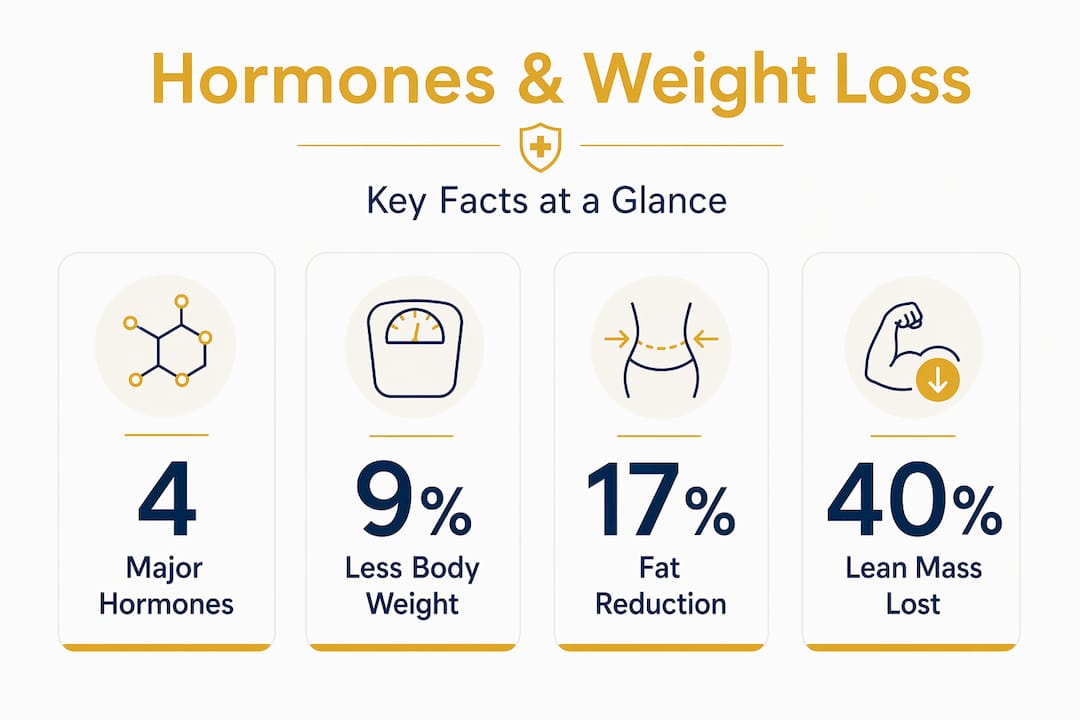
GLP-1 receptor agonists like semaglutide and liraglutide reduce body weight by about 9% after three months, with 17% fat mass decline and 5% lean mass loss. Over a longer course, GLP-1 agonists average 5 to 15% weight loss over 12 months in clinical trials for adults with obesity.
These medications also work in more complex hormonal situations. A multicenter retrospective study found that GLP-1RAs led to a 10.3 kg weight reduction after a median of 13 months in adults with Cushing's syndrome and obesity, without worsening cortisol levels. Cushing's syndrome involves chronically elevated cortisol, which is one of the most treatment-resistant hormonal factors in obesity. That GLP-1 therapy worked effectively even in that context is notable.
The most common side effects are nausea, mild bloating, and temporary changes in bowel habits. These typically ease within the first four to six weeks as your body adjusts to the new hormonal signals.
Pro Tip: Nausea from GLP-1 therapy is almost always dose-dependent. Starting low and titrating slowly under physician supervision reduces side effects significantly and improves adherence over the long term.
Explore how GLP-1 therapy is administered and supervised, or review the full weight loss medication guide to understand all available options before your first consultation.
Preserving lean mass and managing metabolism during hormone-driven weight loss
One clinical concern with any meaningful weight loss, including GLP-1 therapy, is lean mass loss. Muscle tissue is metabolically expensive, meaning your body is happy to break it down when calories are restricted. Losing muscle slows your metabolism and makes the weight easier to regain later.

GLP-1 drugs can cause greater fat-free mass loss, up to 40% of total weight lost as fat-free mass, compared to diet and exercise alone. That is a significant difference. The good news is it is largely preventable with the right protocol.
Here is a practical framework for preserving muscle during GLP-1 therapy or any hormone-focused weight loss program:
- Do resistance training three times per week. Combining GLP-1s with resistance training preserves 70 to 80% of lean mass, versus only 40% preservation on medication alone. Compound movements like squats, deadlifts, and rows are the most efficient.
- Eat enough protein. Target at least 1.2 to 1.6 grams of protein per kilogram of body weight daily. When appetite is suppressed by GLP-1 therapy, prioritizing protein at every meal becomes even more important.
- Monitor body composition, not just weight. Regular DEXA scans or bioelectrical impedance assessments tell you whether you are losing fat or muscle. Scale weight alone gives you an incomplete picture.
- Address thyroid function directly. Hypothyroidism treatment alone produces modest weight loss, but combined with metabolic therapies it supports better outcomes. If your thyroid function and weight loss trajectory are not aligning, ask your physician to test T3 and T4 separately, not just TSH.
- Consider low-carbohydrate nutrition. Reducing refined carbohydrates improves insulin resistance, lowers circulating insulin, and shifts the body toward fat as a primary fuel source.
| Strategy | Effect on lean mass | Effect on fat loss |
|---|---|---|
| GLP-1 therapy alone | Up to 40% of loss is lean mass | Significant fat reduction |
| GLP-1 + resistance training | 70 to 80% lean mass preserved | Comparable fat loss |
| GLP-1 + protein focus | Improved muscle retention | Enhanced satiety |
| DEXA monitoring | Guides protocol adjustments | Identifies true fat loss |
Pro Tip: If your appetite is suppressed by GLP-1 therapy and you are struggling to hit protein targets, a high-quality protein shake after resistance training sessions is one of the most practical ways to bridge the gap without feeling overfull.
The full details on tracking and adjusting your body composition plan are covered in the physician-supervised guide at Grown Up Meds.
Practical strategies and lifestyle adjustments for hormone-optimized weight loss
Medical therapy is most effective when your lifestyle is aligned with your hormonal biology. These are not generic wellness suggestions. Each one directly targets a specific hormonal mechanism that affects your weight.
- Sleep 7 to 9 hours per night. Sleep is the most impactful free intervention for regulating hormones and maintaining healthy weight. Even one night of poor sleep elevates ghrelin, suppresses leptin, raises cortisol, and reduces insulin sensitivity simultaneously. Fixing sleep before adding more exercise or stricter dieting pays larger dividends.
- Keep your calorie deficit moderate. A 300 to 500 calorie daily deficit produces meaningful fat loss while minimizing the hormonal disruptions that cause hunger and metabolic slowdown. Aggressive cuts above 1,000 calories trigger the survival response faster and harder.
- Resistance train regularly. Beyond preserving muscle, lifting weights improves insulin sensitivity, supports testosterone levels and fat loss in men, and reduces estrogen-related fat accumulation in women. The hormonal benefits extend well beyond the workout itself.
- Manage your stress actively. Chronic stress from work, relationships, or aggressive dieting keeps cortisol elevated. The impact of cortisol on weight is direct. High cortisol promotes visceral fat storage regardless of calorie intake. Practices like structured breathing, walking outdoors, and adequate rest are not optional add-ons. They are metabolic interventions.
- Get a full hormonal assessment. Many adults in the 30 to 60 age range have measurable hormonal imbalances including low testosterone, elevated estrogen relative to progesterone, or subclinical thyroid dysfunction. These conditions create hormonal imbalance weight gain that no amount of dieting alone will correct.
- Prioritize whole foods. High-fiber vegetables, lean protein, and healthy fats support the production of adiponectin and GLP-1 naturally, while stabilizing insulin throughout the day.
For long-term success, the expert tips on sustaining weight loss at Grown Up Meds offer detailed guidance on maintaining results after the initial weight comes off.
Why understanding hormones transforms weight loss beyond dieting
Most weight loss programs are built around a simple premise: eat less, move more, and the rest is willpower. That model has been failing people for decades. Not because the people lack discipline, but because the model ignores biology.
When you understand how hormones regulate weight, the frustration of regaining weight after a successful diet is replaced by something more useful: a clear explanation and a better strategy. Hormones are not an excuse for weight gain; they are an explanation. Your body is not sabotaging you out of spite. It is executing a survival program that has been refined over hundreds of thousands of years.
The most productive shift is reframing weight management from a battle of willpower to a project of hormonal alignment. That means accepting a slower pace of loss, prioritizing protein and sleep with the same seriousness as calorie counting, and using medical tools when lifestyle adjustments alone are insufficient.
Estrogen and body weight are deeply connected for women in perimenopause and menopause, and testosterone levels and fat loss are intertwined for men in their 40s and 50s. These are not fringe concerns. They are mainstream metabolic realities that deserve clinical attention, not just encouragement to eat more salad.
Can hormones influence appetite? Absolutely and the answer to that question changes everything about how you approach weight loss. The most durable results come from people who stop fighting their hormones and start working with a physician to understand and address them directly. Reviewing options for choosing safe weight loss treatments is a strong first step toward making that shift with the right medical guidance behind you.
Explore medically supervised hormone optimization for lasting weight loss
Knowing how your hormones work is the first step. Having expert medical support to act on that knowledge is what produces real, lasting results.

Grown Up Meds offers physician-supervised GLP-1 therapy designed specifically for adults who need more than calorie counting. Every treatment plan starts with a personalized health assessment that identifies where your metabolism and hormones may be working against your goals. For men dealing with declining testosterone and shifting body composition, men's vitality services address the hormonal root causes that make fat loss harder after 40. Physician oversight ensures your muscle mass, thyroid function, and metabolic markers stay on track throughout your weight loss journey, so your results are sustainable, not just temporary.
Frequently asked questions
What role does leptin play in weight loss and why does its change make losing weight hard?
Leptin signals your brain about fat stores to reduce appetite, but a 64.5% decrease in leptin persists for at least a year after weight loss, which continuously drives hunger and slows metabolism, making it genuinely difficult to maintain results.
How do GLP-1 receptor agonists help with weight loss?
GLP-1 receptor agonists mimic the natural satiety hormone GLP-1 to reduce appetite and slow gastric emptying. Semaglutide reduces body weight by about 9% after three months and 5 to 15% over 12 months in clinical trials.
Why is preserving lean muscle important during weight loss with hormone therapy?
Lean muscle drives your resting metabolism, and losing it means burning fewer calories at rest long after you reach your goal weight. Resistance training combined with GLP-1 therapy preserves 70 to 80% of lean mass, compared to just 40% preservation on medication without exercise.
What lifestyle changes support hormone-optimized weight loss?
Sleep, a moderate calorie deficit, stress management, and resistance training all directly regulate key weight hormones including leptin, ghrelin, cortisol, and insulin. Medical supervision adds personalized hormonal assessment that lifestyle changes alone cannot address.