Feeling off despite doing everything right? You're sleeping, eating reasonably well, staying active, yet something still feels fundamentally wrong. Fatigue lingers. Your mood swings without warning. Weight shifts in ways you can't explain. For many adults, this isn't a willpower problem or an imaginary one. It's a hormone problem. Research confirms that targeted, physician-supervised interventions, including neuro-metabolic support and evidence-based supplementation, can meaningfully shift hormone-related symptoms. This guide walks you through a practical, stepwise approach to hormone balancing that's grounded in current science and built around your individual biology, not a generic template.
Table of Contents
- Understanding hormone imbalance and its effects
- Preparing for hormone balancing: What you need
- Step-by-step hormone balancing protocol
- Monitoring progress and avoiding common pitfalls
- Challenging the quick-fix mindset: Why one size fails in hormone health
- Ready for physician-guided hormone optimization?
- Frequently asked questions
Key Takeaways
| Point | Details |
|---|---|
| Personalization is key | Lasting hormone balance requires a medical assessment and tailored treatment plan. |
| Stepwise approach wins | Structured, gradual interventions supported by evidence lead to the best outcomes. |
| Supervision ensures safety | Physician guidance and regular monitoring help prevent mistakes and side effects. |
| Patience yields results | Improvements are usually seen over weeks to months, not overnight. |
Understanding hormone imbalance and its effects
Hormones are chemical messengers produced by glands throughout your body. They regulate nearly everything: metabolism, sleep cycles, mood, reproductive function, stress response, and even how your body stores fat. When these messengers fall out of sync, even slightly, the downstream effects can feel enormous.
What makes hormone imbalance so frustrating to navigate is how broadly it shows up. Fatigue that coffee doesn't fix. Mood changes that don't match your circumstances. A metabolism that seems to have stalled. These aren't vague complaints. They're real physiological signals that something in your endocrine system needs attention.
Common symptoms of hormone imbalance include:
- Persistent fatigue, even after adequate sleep
- Irregular menstrual cycles or changes in cycle length and flow
- Hot flashes, night sweats, or temperature dysregulation
- Low libido or sexual dysfunction
- Unexplained weight gain, particularly around the midsection
- Brain fog and difficulty concentrating
- Anxiety, depression, or sudden emotional shifts
- Dry skin, thinning hair, or brittle nails
Here's what most people get wrong: they assume hormone imbalance is a singular problem with a singular fix. It isn't. Hormone levels shift differently across genders, age groups, and even seasons. A 35-year-old woman experiencing perimenopause symptoms faces a completely different hormonal picture than a 50-year-old man with declining testosterone. And within each group, individual variation is enormous. That's precisely why systematic hormone optimization requires personalized assessment, not a one-size-fits-all approach.
Research bears this out. Targeted interventions using Ashwagandha extract combined with micronutrient support improved estradiol and progesterone levels, decreased FSH and LH, reduced hot flashes, and improved menstrual regularity by 36% in menopausal women. Those aren't trivial numbers. They reflect what's possible when an intervention is matched to the specific hormonal picture of the patient.
The takeaway here is clear. Generic wellness advice, such as "sleep more" or "reduce stress," touches the surface. Real hormone optimization requires a structured, individualized, and medically informed plan.
Preparing for hormone balancing: What you need
Before any protocol begins, you need a clear picture of where your hormones actually stand. This is non-negotiable. Jumping into supplementation, dietary changes, or any form of hormone therapy without baseline data is like navigating without a map. You might move, but you have no idea if it's in the right direction.
Here's what the preparation phase should include:
- Baseline bloodwork: Comprehensive labs covering key hormones (estrogen, progesterone, testosterone, FSH, LH, thyroid panel, cortisol, insulin)
- Symptom tracking: A detailed health journal documenting daily symptoms, sleep quality, energy, mood, and cycle patterns if applicable
- Medical history review: Prior diagnoses, medications, and family history of hormonal conditions
- Nutritional assessment: Current diet patterns, identified deficiencies, and glycemic load evaluation
- Stress and lifestyle evaluation: Sleep hygiene, physical activity, and daily stress exposures
| Preparation element | Why it matters | Estimated time frame |
|---|---|---|
| Baseline lab panel | Establishes hormonal starting point | 1 to 2 weeks |
| Symptom tracking journal | Identifies patterns and triggers | Ongoing from day 1 |
| Dietary assessment | Reveals glycemic and micronutrient gaps | 1 week |
| Provider consultation | Aligns treatment to individual profile | Before protocol begins |
| Stress management plan | Reduces cortisol interference on hormones | Ongoing |
Research consistently shows that individualized neuro-metabolic interventions, including low-glycemic index diets, targeted micronutrient support, and stress reduction strategies, perform significantly better than generalized recommendations. Your starting point is unique, and your preparation should reflect that.
On the nutrition side, the low-glycemic diet deserves special attention. High-glycemic foods spike insulin, which directly disrupts sex hormone balance and amplifies symptoms like fatigue and weight gain. Replacing processed carbohydrates with whole grains, legumes, non-starchy vegetables, and quality proteins is one of the most impactful non-pharmaceutical steps you can take.

You'll also want to think realistically about timelines. Hormone balancing is not a two-week fix. Depending on the degree of imbalance and the intervention used, meaningful improvement may take anywhere from four to twelve weeks. Setting that expectation from the start prevents the frustration of abandoning an effective protocol too soon.
Pro Tip: Start your symptom journal before your first provider appointment. Three to four weeks of daily entries gives your physician a meaningful data set and often accelerates the diagnostic and treatment process significantly. Use a simple app or even a paper notebook. Consistency matters more than the format.
Why is the overview of hormone regulation approaches through a supervised platform so important here? Because unsupervised protocols, however well-intentioned, frequently miss critical variables. A deficiency that looks like low estrogen might actually be driven by adrenal fatigue or thyroid dysfunction. Without labs, that distinction is invisible.
Step-by-step hormone balancing protocol
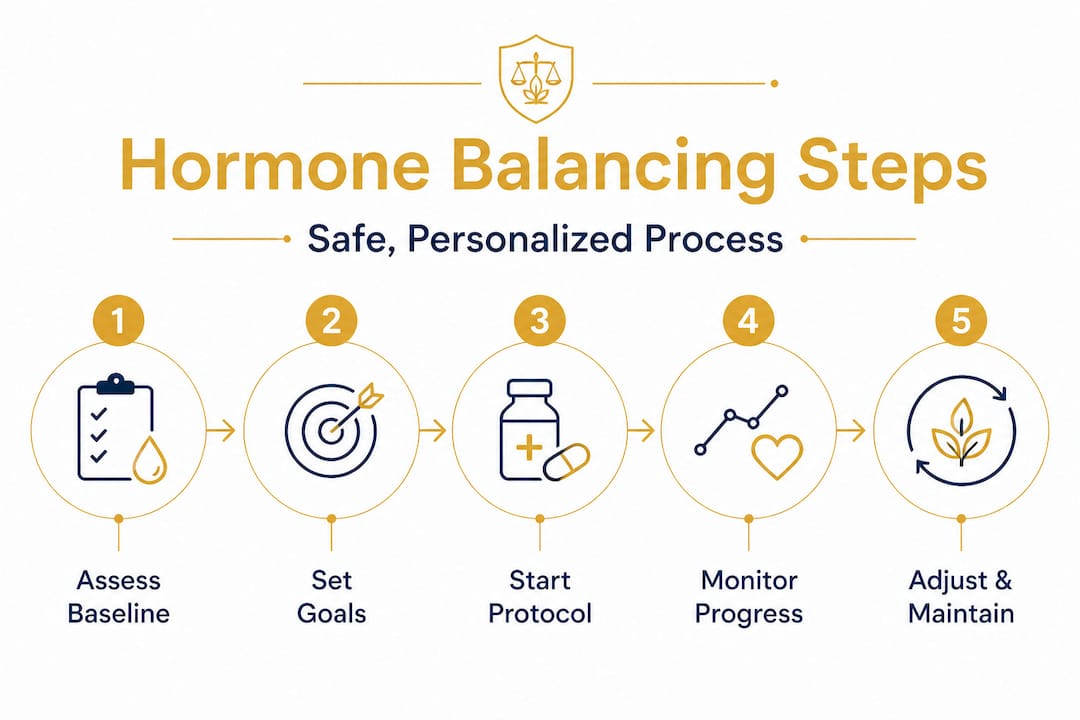
With preparation done and a clear baseline in hand, a structured protocol becomes both actionable and safe. Here's how a physician-guided approach typically unfolds.
-
Assessment and baseline labs. This is your starting point. Labs cover all key hormones plus supporting markers like blood glucose, lipids, vitamin D, and iron. The results guide everything that follows. No guessing, no generalizing.
-
Lifestyle and nutrition reset. Before any therapeutic intervention, foundational habits get addressed. A low-glycemic index diet reduces insulin interference. Micronutrients such as magnesium, zinc, vitamin D, and B6 are assessed and replenished where needed. Sleep hygiene and stress reduction strategies are implemented. These changes alone can produce measurable hormonal shifts within four to eight weeks.
-
Targeted therapy as indicated by your provider. Based on labs and symptom patterns, your physician may recommend herbal support such as Ashwagandha, nutraceuticals, or in appropriate cases, prescription-level hormone therapy. Each intervention is selected for your specific profile, not a general formula. Physician-supervised use of targeted interventions including Ashwagandha, nutritional support, and lifestyle modification normalized LH and FSH levels in 73% of participants and improved menstrual regularity across a clinical study group.
-
Monitor for effects and repeat labs. Follow-up labs at six to eight weeks confirm whether the protocol is working. Symptoms are tracked alongside lab values to get both the objective and subjective picture. Adjustments happen here, not arbitrarily, but based on data.
| Approach | Key benefits | Key risks |
|---|---|---|
| Physician-guided protocol | Personalized, data-driven, adjustable | Requires access to provider and labs |
| DIY/unsupervised approach | Lower upfront cost | Misdiagnosis, wrong dosing, undetected side effects |
| Subscription supplements alone | Convenient | May not address root cause |
| Lifestyle changes only | Low risk, high foundation value | Insufficient alone for significant imbalance |
Exploring health optimization strategies through a platform that connects you directly with licensed physicians removes the guesswork and significantly reduces risk.
Pro Tip: Small, consistent changes compound dramatically over time. Improving sleep by one hour per night, reducing refined sugar, and managing one major stressor simultaneously can shift cortisol, insulin, and sex hormone balance within weeks. Don't wait until everything is "perfect" to start. Start where you are and build systematically.
Monitoring progress and avoiding common pitfalls
Protocol execution is only part of the equation. Knowing what to look for as you progress, and what warning signs to take seriously, is what separates a sustainable improvement from a frustrating plateau.
Signs that your hormone balancing protocol is working include:
- Improved energy levels, especially in the afternoon
- More stable mood throughout the day
- Improved sleep quality and duration
- Reduction in hot flashes or night sweats
- Gradual normalization of menstrual cycles where applicable
- Modest but measurable weight shifts, particularly reduced midsection accumulation
- Increased libido and general sense of vitality
Warning signs that something needs attention:
- No noticeable improvement after eight to twelve weeks
- New symptoms appearing after starting a therapeutic intervention
- Worsening of existing symptoms
- Acne, bloating, or mood worsening from hormone therapy
- Any cardiovascular symptoms, unusual bleeding, or severe mood shifts
As one prominent clinical discussion notes about bioidentical hormone replacement therapy, BHRT can restore physiologic levels and relieve symptoms effectively, but it is not a cure-all. Misuse or excessive dosing carries real risks, and the therapy performs best when carefully monitored and adjusted.
"Hormone therapy is most effective when it's not treated as a permanent, static prescription but as a dynamic, evolving protocol that responds to how your body changes over time." This principle should guide every follow-up appointment.
Follow-ups with your physician should happen at minimum every six to eight weeks during the active phase of a new protocol. Once stable, quarterly monitoring is typically sufficient. The goal is to never stay on a protocol that's no longer appropriate for where you are today.
Systematic monitoring approaches through a supervised telehealth platform make this cadence far easier to sustain. You don't have to rearrange your schedule for a traditional clinic visit every few months. The support stays consistent even when life doesn't.
Challenging the quick-fix mindset: Why one size fails in hormone health
Here's an uncomfortable truth that doesn't get said often enough in wellness spaces: most people who feel disappointed by hormone therapy didn't fail the therapy. The therapy failed them because it was applied too broadly, too quickly, or without the ongoing personalization that hormone health genuinely requires.
We see it repeatedly. Someone reads about a supplement that "balances hormones naturally," buys three months' supply, sees marginal improvement, and concludes that hormone optimization doesn't work. What they actually experienced was an unsupervised, non-individualized approach applied to a complex, individual biological system. That's not optimization. That's guessing.
Lasting hormone balance takes weeks to months. Expecting a meaningful hormonal shift in days sets people up for discouragement. The physiology doesn't move that fast. Hormonal systems are slow to destabilize and slow to restabilize. Patience isn't a passive virtue here. It's a clinical requirement.
Compounded BHRT and many marketed "natural" hormone therapies also carry more uncertainty than their proponents often admit. The reality is that no long-term randomized controlled trials exist for many compounded hormone treatments, which is precisely why caution and physician supervision are essential, not optional.
The best outcomes we see come from three things: deep personalization based on actual lab data, consistent monitoring that enables real-time protocol adjustment, and a willingness to address the underlying drivers of imbalance rather than chasing symptomatic relief alone. If cortisol dysregulation from chronic stress is disrupting your sex hormones, taking estrogen alone won't solve it. If insulin resistance is affecting testosterone, the diet has to change alongside any hormonal support.
This is where real-world hormone guidance from experienced physicians makes an irreplaceable difference. A clinician who looks at your complete picture, not just your estrogen number, gives you something no supplement stack or social media protocol can offer: a plan built specifically around your biology, your history, and your goals.
Ready for physician-guided hormone optimization?
If this guide has clarified anything, it's that sustainable hormone balance isn't accidental. It requires the right assessment, the right tools, and the right medical support from day one.
Grown Up Meds connects you with licensed physicians who specialize in exactly this kind of personalized, evidence-based hormone health support. From your initial assessment through ongoing monitoring and protocol adjustments, every step is supervised, science-backed, and designed around you. No cookie-cutter plans, no unsupervised risk. If you're ready to stop guessing and start optimizing, start your hormone balancing journey with a platform built to deliver real, lasting results.
Frequently asked questions
How long does it take to notice results from hormone balancing?
Most people notice meaningful symptom improvements within several weeks to a few months. Protocols combining Ashwagandha, lifestyle changes, and targeted support consistently show measurable improvements in energy, mood, and cycle regularity over that time frame.
Is it safe to balance hormones without a doctor?
Unsupervised hormone therapy carries real risks including incorrect dosing, missed underlying conditions, and unmonitored side effects. Medical evaluation remains the safest and most effective foundation for lasting improvement, as BHRT and other therapies can cause harm when misused.
What are the top signs that your hormones may be out of balance?
Key signs include persistent fatigue, mood instability, irregular or painful cycles, hot flashes, low libido, and unexplained weight gain. These menstrual and metabolic symptoms are among the most consistently improved with neuro-metabolic and lifestyle-based support.
What is the difference between bioidentical hormones and synthetic ones?
Bioidentical hormones are structurally identical to the hormones your body produces naturally, which can make them more compatible with your physiology in supervised settings. Emerging safety data favoring bioidenticals over synthetic options continues to support their appropriate, physician-guided use.