
Facing a wall of weight loss solutions, from prescription injections to surgical procedures to supplement stacks, can feel paralyzing. The stakes are real: picking the wrong path wastes time, money, and can genuinely harm your health. What separates people who succeed long-term from those who cycle through failed attempts is not willpower. It is a structured, medically guided decision-making process. This guide walks you through exactly that, covering assessment, treatment options, risk evaluation, and ongoing monitoring so you can move forward with confidence and clarity.
Table of Contents
- Get assessed: Why personalized evaluation matters
- Know your options: Medications, surgery, and lifestyle interventions
- Weigh pros and cons: Risks, benefits, and practical considerations
- Stay on track: Monitoring, follow-ups, and when to adjust
- Our expert take: An inside look at lasting weight loss choices
- Ready to start your personalized weight loss journey?
- Frequently asked questions
Key Takeaways
| Point | Details |
|---|---|
| Personal assessment first | Always get evaluated by a healthcare professional before starting any weight loss treatment. |
| Match treatment to needs | Choose between medication, surgery, or lifestyle changes based on your specific health profile and medical guidance. |
| Consider pros and cons | Understand the potential benefits and risks of each treatment type, including side effects and commitment level. |
| Monitor and adjust | Track your progress and work with your provider to make changes if results stall or unexpected issues arise. |
Get assessed: Why personalized evaluation matters
Now that you understand the importance of moving beyond guesswork, let's look at why a professional assessment is your essential first milestone.
Most people skip straight to researching medications or surgeries before they have a clear picture of their own health profile. That approach is like choosing a prescription without knowing the diagnosis. A proper medical evaluation changes everything because it tells you not just what could work, but what is actually appropriate for your body, your history, and your goals.
A physician-supervised assessment typically covers several key areas:
- Body Mass Index (BMI): Your BMI gives a baseline measurement of weight relative to height. It determines which treatment categories you are eligible for and helps set realistic targets.
- Medical history: Conditions like type 2 diabetes, hypertension, sleep apnea, and fatty liver disease all affect which treatments are safe and which may actually resolve those conditions alongside weight loss.
- Comorbidities: These are health conditions that exist alongside obesity. Their presence often accelerates treatment eligibility, particularly for surgery.
- Current medications: Some drugs cause weight gain or interact with weight loss treatments. Your provider needs the full picture.
- Mental health and behavioral patterns: Emotional eating, binge eating disorder, and depression all require specific consideration in any weight management plan.
- Lab work: Thyroid function, blood sugar, cholesterol, and hormone panels can reveal underlying drivers of weight gain that need to be addressed first.
The NIDDK recommends a personalized assessment including BMI, comorbidities, medical history, and goals before selecting any weight loss treatment. This is not bureaucratic caution. It is the foundation of a plan that actually works.
"A 5 to 10 percent reduction in body weight can produce meaningful improvements in blood pressure, blood sugar, and cholesterol levels, even before reaching an 'ideal' weight."
That benchmark matters because it reframes success. You do not need to lose 80 pounds to improve your health. You need a realistic, medically grounded target and a treatment matched to your starting point. Honest goal-setting during your assessment prevents the frustration that derails so many people early on.
Skipping objective medical input leads to predictable problems: choosing treatments that are not appropriate for your BMI or health status, missing underlying conditions that block progress, and setting unrealistic timelines that cause you to abandon effective strategies too soon. The assessment is not a hurdle. It is the smartest investment you can make before spending a dollar on any treatment.
Know your options: Medications, surgery, and lifestyle interventions
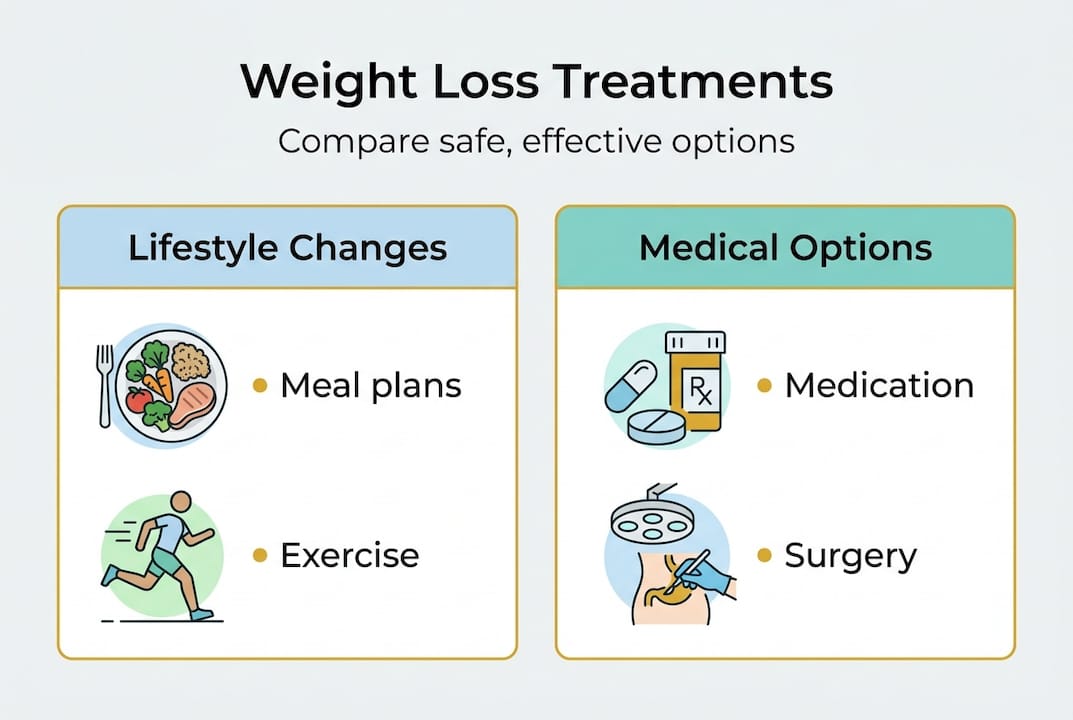
Once you've had a comprehensive assessment, you'll understand which category you may fit into. Here's how the main treatment types compare.
Weight loss treatment is not a single thing. It is a spectrum of evidence-based options, each with different mechanisms, eligibility criteria, and expected outcomes. Understanding this spectrum lets you have a genuinely informed conversation with your provider instead of arriving with a single option in mind.
1. Lifestyle therapy This is the foundation for every other treatment. It includes structured dietary changes, increased physical activity, and behavioral support such as cognitive behavioral therapy. On its own, lifestyle therapy typically produces 5 to 10 percent weight loss over 6 to 12 months. It is appropriate for nearly everyone and is often combined with other treatments for better results.

2. Prescription medications Today's weight loss medications are far more effective than those from a decade ago. GLP-1 receptor agonists like semaglutide and tirzepatide work by mimicking hormones that regulate appetite and blood sugar. Clinical trials show average weight loss of 15 to 22 percent of body weight over 68 to 72 weeks. Most medications are approved for adults with a BMI of 30 or higher, or 27 and above with at least one weight-related health condition.
3. Metabolic and bariatric surgery Surgery is the most effective and durable option for significant weight loss. Bariatric procedures like sleeve gastrectomy and gastric bypass are indicated for BMI of 35 to 40 or higher, or BMI of 35 with serious comorbidities, and produce greater and more durable weight loss than medications alone. Surgery also resolves type 2 diabetes in a large percentage of patients, often within days of the procedure.
Here is a quick comparison of the three main categories:
| Treatment | Average weight loss | Eligibility | Durability |
|---|---|---|---|
| Lifestyle therapy | 5 to 10% | All adults | Moderate with sustained effort |
| Prescription medications | 15 to 22% | BMI ≥30 or ≥27 with conditions | Good with continued use |
| Bariatric surgery | 25 to 35% | BMI ≥35 to 40 | Excellent long-term |
Pro Tip: Do not rule out surgery because it sounds extreme. For people with a BMI above 40 or serious diabetes, it may actually be the safest long-term option when you factor in the health risks of staying at your current weight.
Choosing between these options is not about picking the most aggressive approach. It is about matching the right level of intervention to your specific health situation, goals, and readiness. That is exactly why the assessment comes first.
Weigh pros and cons: Risks, benefits, and practical considerations
Before finalizing any choice, it is essential to understand what you gain, give up, or need to adapt to. Let's examine these practical pros and cons.
Every treatment option carries a real-world profile of benefits, risks, and lifestyle demands. Understanding this profile before you commit prevents unpleasant surprises and helps you stay consistent.
Surgery and medications each have distinct advantages and disadvantages. Surgery offers superior durability and often resolves comorbidities like diabetes and sleep apnea, but it is invasive, requires a recovery period of several weeks, and demands lifelong dietary changes. Medications are non-invasive and reversible, but cost can be significant without insurance, adherence is critical, and side effects like nausea, vomiting, and constipation affect many users in the early weeks.
Here is a more detailed breakdown:
| Factor | Medications | Surgery |
|---|---|---|
| Invasiveness | None | Significant |
| Recovery time | None | 2 to 6 weeks |
| Weight regain risk | High if stopped | Lower long-term |
| Comorbidity resolution | Partial | Often complete |
| Monthly cost | $900 to $1,300 without coverage | One-time cost, insurance-dependent |
| Side effects | Nausea, GI upset, fatigue | Nutritional deficiencies, dumping syndrome |
Key considerations for each path include:
- Medications: You must take them consistently and long-term to maintain results. Stopping typically leads to weight regain within 12 months. If you are planning a pregnancy, most GLP-1 medications need to be stopped at least two months before conception.
- Surgery: Requires a committed pre-operative evaluation process, often 3 to 6 months. Post-operative nutrition protocols are non-negotiable. Vitamin and mineral supplementation becomes a permanent part of daily life.
- Combination therapy: Physicians are increasingly using GLP-1 medications before surgery to reduce surgical risk, and after surgery to prevent weight regain. This emerging approach is showing strong results in clinical practice.
Pro Tip: Before your first provider appointment, write down three specific questions: What is the total cost including monitoring visits? What support resources are available if I struggle with side effects or adherence? And what does the escalation plan look like if this treatment stops working?
Knowing these details upfront helps you choose a treatment you can realistically sustain, not just one that sounds promising in theory.
Stay on track: Monitoring, follow-ups, and when to adjust
Once treatment is underway, consistent and careful monitoring is essential for ongoing effectiveness and safety. Here is what that looks like.
Starting a weight loss treatment is not the finish line. It is the beginning of an active, ongoing process that requires regular check-ins, honest data tracking, and the willingness to adjust when something is not working. People who treat their first treatment choice as permanent, regardless of results, often stall out and give up entirely.
Here is a practical monitoring framework to follow:
- Track your weight consistently. Weigh yourself at the same time each week, not daily. Daily fluctuations from water retention and digestion can be misleading and discouraging.
- Monitor lab values every 3 to 6 months. Blood sugar, lipid panels, thyroid function, and kidney markers all shift with significant weight loss. Your provider needs this data to adjust your plan safely.
- Log symptoms and side effects. Keep a simple journal of how you feel, especially in the first 8 to 12 weeks of a new medication. Nausea, fatigue, and mood changes are common but should be reported.
- Track non-scale victories. Blood pressure improvements, better sleep, reduced joint pain, and improved energy are all meaningful health outcomes that deserve attention alongside the number on the scale.
- Set a clear response threshold. Most providers expect to see at least 5 percent weight loss within the first 12 to 16 weeks of medication. If you are not hitting that benchmark, it is time to reassess.
"Non-responders to a given treatment should have their regimen stepped up early rather than waiting months for results that may never come."
Current clinical guidance also highlights specific edge cases that require immediate provider communication. If you are planning a pregnancy, weight loss medications should be stopped well in advance. If you have had bariatric surgery and are now considering GLP-1 medications, your provider needs to know because delayed gastric emptying caused by these drugs can interact with post-surgical anatomy. Non-responders, meaning people who lose less than 5 percent of body weight after 12 weeks of treatment, should have their therapy escalated rather than continued unchanged.
Regular follow-ups are not optional extras. They are the mechanism through which your treatment stays calibrated to your changing body and health status. Think of them as performance reviews for your health plan.
Our expert take: An inside look at lasting weight loss choices
Here is something most weight loss content will not tell you: the people who struggle most are often the ones who are most focused on the scale. They measure success in pounds lost per week and feel like failures the moment the number plateaus. But weight loss is a metabolic process, not a math equation, and the body adapts in ways that no app or calculator fully predicts.
The uncomfortable truth is that lasting results require combining a science-based strategy with genuine personalization and real patience. A medication that produces dramatic results for one person may do almost nothing for another due to differences in gut hormone response, genetics, and baseline metabolic rate. This is why the one-size-fits-all approach fails so reliably.
Telehealth platforms have become a genuine game changer here because they make ongoing, personalized oversight accessible without requiring you to take time off work for every follow-up. When you have a clinical team that knows your history, tracks your labs, and adjusts your plan proactively, you are not guessing anymore. You are executing a strategy.
Set small, sustainable milestones. Celebrate a 5 percent loss. Celebrate improved lab values. Celebrate three months of consistent adherence. These wins compound over time in ways that crash diets and quick fixes never do.
Ready to start your personalized weight loss journey?
If you're motivated to take control of your health with proven, personalized strategies, here's your next step.
The framework in this article gives you a clear picture of what medically supervised weight loss actually looks like, but reading about it and doing it are two different things. Grown Up Meds connects you with licensed physicians who specialize in exactly this process, from your initial assessment through ongoing monitoring and treatment adjustment.

Through our platform, you can explore personalized weight loss plans that include physician oversight, access to FDA-approved medications delivered from US-based pharmacies, and the kind of high-touch clinical support that keeps you on track when the process gets complicated. Whether you are starting fresh or have tried other approaches without lasting results, our team is ready to build a plan around your specific health profile and goals.
Frequently asked questions
Do I need a doctor to start weight loss medication?
Yes, a health professional should assess your eligibility and underlying risks before you start any prescription weight loss medication. Professional evaluation covering BMI, comorbidities, and medical history is the essential first step.
What is the minimum BMI for surgery or medication?
Most guidelines suggest medication for BMI over 30, or over 27 with health issues, and surgery for BMI 35 or higher with conditions like diabetes. Bariatric surgery thresholds are well established and tied to comorbidity status.
Is it possible to combine medication and surgery?
Yes, doctors now combine medications like GLP-1s with surgery for added benefit before and after the operation. This combination approach is increasingly used to reduce surgical risk and prevent post-operative weight regain.
What if I stop losing weight on a treatment?
If you are a non-responder, your provider can switch or step-up your regimen for better results. Early escalation is now recommended rather than waiting months on an ineffective protocol.
Are weight loss treatments safe during pregnancy planning?
Certain medications should be stopped if planning pregnancy, and your doctor needs to know your plans well in advance. Stopping medications early before conception is a standard safety precaution in medically supervised programs.