
Hormonal imbalance is one of the most underdiagnosed contributors to chronic health problems, yet many people live with its effects for years without connecting the dots. The reason to why treat hormonal imbalance goes far beyond managing hot flashes or irregular periods. Hormones regulate your metabolism, sleep, mood, immune response, cognitive function, and cardiovascular health. When one part of that system breaks down, the ripple effects reach every corner of your body. Understanding this isn't just reassuring. It's the first step toward doing something about it.
Table of Contents
- Key takeaways
- Recognizing symptoms of hormonal imbalance
- What causes hormonal imbalances
- Why treat hormonal imbalance: the real benefits
- Treatment options for hormonal health
- Practical steps to take right now
- My take on treating hormonal imbalance
- How Grownupmeds supports your hormone health
- FAQ
Key takeaways
| Point | Details |
|---|---|
| Hormonal imbalance is systemic | It affects energy, mood, cognition, metabolism, and long-term disease risk, not just reproductive health. |
| Early treatment reduces chronic risk | Addressing imbalance early lowers the likelihood of osteoporosis, heart disease, and insulin resistance. |
| Root causes matter most | Stress, metabolic dysfunction, and nutrient deficiencies drive most imbalances and must be treated directly. |
| Treatment requires a layered approach | Lifestyle, nutrition, and physician-supervised therapy work together more effectively than any single fix. |
| Monitoring is non-negotiable | Hormonal balance shifts over time and requires ongoing evaluation to stay safe and effective. |
Recognizing symptoms of hormonal imbalance
Most people assume hormonal problems show up as reproductive symptoms. Think irregular cycles, fertility issues, or low libido. The reality is far broader. Hormonal imbalance affects energy production, mood, cognition, metabolism, immune balance, and long-term disease risk in ways that have nothing to do with reproductive function.
Here are the most common symptoms worth paying attention to:
- Fatigue that doesn't improve with rest, often tied to thyroid dysfunction or cortisol dysregulation
- Unexplained weight gain or difficulty losing weight, particularly around the abdomen, which points to insulin resistance or low thyroid hormone
- Mood swings, anxiety, or persistent low mood, frequently connected to estrogen, progesterone, or testosterone fluctuations
- Brain fog and poor concentration, which can signal cortisol excess, thyroid imbalance, or low estrogen
- Disrupted sleep, including insomnia or waking at 3 a.m., often tied to elevated cortisol or low progesterone
- Skin changes such as acne, dryness, or thinning hair, which reflect androgen and thyroid shifts
- Irregular or painful menstrual cycles, or changes in libido in both men and women
The tricky part is that symptoms overlap with other conditions, which means hormonal imbalance is routinely misattributed to stress, aging, or depression. A patient with low thyroid hormone might be told they simply need better sleep habits. Someone with low testosterone might be diagnosed with burnout. Up to 39% of men over 45 experience low testosterone linked to fatigue and cognitive changes, yet the condition goes undetected in a significant portion of that group.
Pro Tip: Track your symptoms daily for at least six weeks before your medical visit. Note time of day, diet, sleep hours, and stress levels alongside each symptom. This data dramatically improves diagnostic accuracy because patterns become visible that a single appointment cannot capture.
What causes hormonal imbalances
Hormonal signaling is not a simple one-to-one relationship between a gland and a target organ. It is a coordinated conversation between the brain, adrenal glands, gut, liver, metabolism, and your external environment. When any part of that conversation breaks down, the entire network shifts.
Hormone imbalances rarely arise from a single hormone defect. More often, they reflect a systems-level signaling failure. The most common drivers include:
- Chronic psychological stress, which elevates cortisol and disrupts reproductive hormones, thyroid function, and insulin sensitivity
- Metabolic dysfunction, including insulin resistance, which directly alters sex hormone production and clearance
- Nutrient deficiencies, especially in magnesium, zinc, vitamin D, and B vitamins, all of which are required for hormone synthesis and receptor function
- Gut dysbiosis, where an imbalanced microbiome impairs estrogen metabolism and increases inflammatory signaling
- Toxin and endocrine disruptor exposure from plastics, pesticides, and personal care products that mimic or block hormonal activity
- Aging, which naturally shifts the output of the gonads, adrenal glands, and thyroid over decades
Chronic stress elevates cortisol in ways that suppress thyroid conversion, increase insulin resistance, lower testosterone and progesterone, and fragment sleep. All of this from one sustained stressor. That's why lab results sometimes appear within the normal reference range even when symptoms are debilitating. Reference ranges reflect population averages, not your individual optimal function. A result that looks "normal" on paper may still represent a meaningful decline from your personal baseline.
This is also why treating hormonal imbalance requires addressing root causes rather than just replacing hormones. Adding a hormone to a system still generating excess cortisol, poor gut motility, or unmanaged blood sugar is like pouring water into a leaking bucket.
Why treat hormonal imbalance: the real benefits
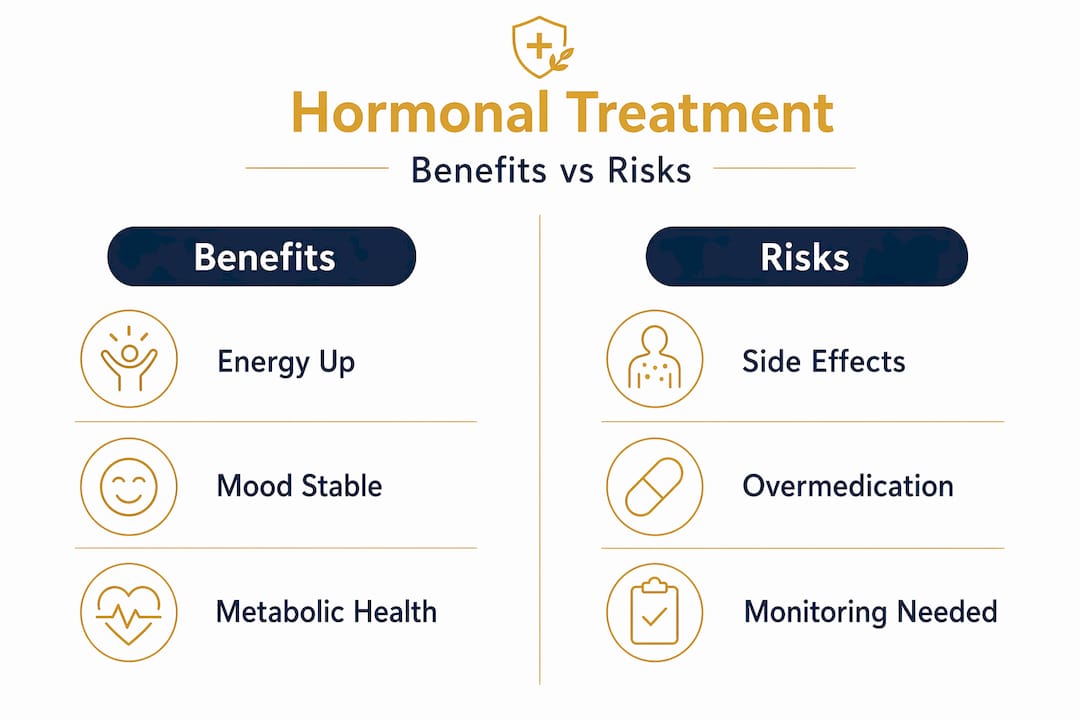
The most direct reason to treat hormonal imbalance is symptom relief. But the long-term benefits are where the argument becomes undeniable. Early detection and treatment reduce the risks of osteoporosis, cardiovascular disease, insulin resistance, and mood disorders. These are not abstract future concerns. They are conditions that develop silently over years when the hormonal environment stays out of range.

Consider what restored hormonal balance actually delivers across body systems:
Metabolic health. Thyroid hormones regulate basal metabolic rate. Insulin and cortisol govern fat storage and energy availability. Testosterone supports lean muscle mass. When these hormones are optimized, your metabolism works as designed, making weight management significantly easier and more sustainable.
Cognitive function. Estrogen has documented neuroprotective effects. Low testosterone correlates with cognitive decline in aging men. Cortisol excess physically reduces hippocampal volume over time. Restoring balance protects brain health in measurable ways.
Cardiovascular protection. Estrogen supports arterial flexibility and cholesterol balance. Testosterone supports heart muscle function. Thyroid hormone regulates heart rate and lipid metabolism. Leaving imbalances untreated accelerates cardiovascular aging faster than most people realize.
Mood and mental health. Progesterone has calming, GABA-like effects on the nervous system. Serotonin production depends partly on estrogen levels. Testosterone affects motivation and sense of well-being in both men and women. Mood disorders that don't respond to standard treatments often have a hormonal component that never gets evaluated.
The following table shows how the effects of untreated hormonal imbalance stack up against the benefits of treatment:
| Health area | Untreated hormonal imbalance | With appropriate treatment |
|---|---|---|
| Energy levels | Persistent fatigue, poor exercise tolerance | Improved stamina and daily functioning |
| Metabolic health | Weight gain, insulin resistance, dyslipidemia | Better glucose control, healthier body composition |
| Bone density | Accelerated bone loss, fracture risk | Maintained or improved density over time |
| Cardiovascular health | Elevated inflammatory markers, arterial stiffness | Reduced cardiovascular risk factors |
| Mental health | Anxiety, depression, brain fog | Stabilized mood and sharper cognition |
| Sleep quality | Insomnia, disrupted cycles | More restorative, consistent sleep |
The benefits of hormonal balance are not cosmetic or optional. They directly determine your quality of life and long-term disease trajectory.
Treatment options for hormonal health
Treating hormonal imbalance is not a single protocol applied to everyone. Effective care is individualized, layered, and built on a stable physiological foundation. Hormone therapy is safest when combined with regulated blood sugar, good gut health, and sufficient nutrient status.
Medical treatment options include:
- Hormone replacement therapy (HRT), which can include estrogen, progesterone, testosterone, or thyroid hormones, depending on deficiency
- Thyroid medications, including levothyroxine for hypothyroidism or liothyronine when T3 conversion is impaired
- Insulin sensitizers such as metformin, which reduce the metabolic disruption that drives sex hormone imbalances
- GLP-1 medications, which are increasingly used to address the metabolic foundation that affects hormonal function
- Peptide therapies, which support growth hormone, recovery, and metabolic regulation in a targeted way
HRT can quickly relieve symptoms like hot flashes and night sweats, but it requires physician monitoring to remain safe and effective. Compounded bioidentical hormones in particular lack FDA oversight and carry unproven safety claims. That distinction matters. Regulated protocols delivered under physician supervision produce very different outcomes than unmonitored hormone use.
Lifestyle interventions are not optional additions to medical treatment. They are part of the treatment itself. Getting 7 to 8 hours of sleep, prioritizing fiber-rich foods and healthy fats, managing chronic stress through evidence-based methods, and reducing toxin exposure all shift the hormonal environment in measurable ways. Cruciferous vegetables specifically support estrogen metabolism through the liver. Resistance training increases testosterone and insulin sensitivity simultaneously.
Pro Tip: Before starting any hormone therapy, ask your physician for a full thyroid panel (including free T3 and reverse T3), fasting insulin, and a nutrient panel covering vitamin D, magnesium, and B12. These results will shape whether therapy is safe and how it should be dosed. A physician who skips this step is working with incomplete information.
For a detailed walkthrough of how to approach this process safely, the hormone balancing guide at Grownupmeds covers each phase from assessment through ongoing optimization.
Practical steps to take right now
If you recognize yourself in the symptoms described above, the path forward is clearer than you might think. Here's how to move from suspicion to diagnosis to treatment:
- Start a symptom log today. Record energy, sleep, mood, weight, and any physical changes every day for six to eight weeks. Note timing relative to meals, stress events, and menstrual cycle if applicable.
- Schedule a comprehensive evaluation. A thorough health assessment goes beyond a standard annual physical. Ask specifically for hormone panels, metabolic markers, and nutrient levels.
- Ask pointed questions. Request your actual lab numbers and reference ranges, not just a "normal" or "abnormal" verdict. Ask how your levels compare to optimal ranges for your age and sex, not just the population average.
- Address lifestyle foundations first. Start improving sleep, reducing processed food intake, and managing stress before or alongside any medical treatment. These changes amplify everything else you do.
- Consider telehealth platforms. Physician-supervised telehealth services allow for more personalized, ongoing evaluation than a 15-minute annual appointment. This matters because hormonal balance is dynamic and treatment requires iterative adjustments over months, not a single prescription.
- Know the red flags. Sudden severe fatigue, heart palpitations, unexplained rapid weight change, or significant mood breaks warrant urgent evaluation, not a six-week wait for a standard appointment.
Why is hormonal balance important enough to prioritize over other health goals? Because it is the underlying system that determines how well every other intervention works.
My take on treating hormonal imbalance
I've seen patients spend years cycling through antidepressants, sleep aids, and diet plans, all without anyone checking whether their hormonal environment could even support those interventions working. The frustration is real, and it's largely avoidable.
The biggest mistake I see is people seeking a single hormone fix for what is fundamentally a systems problem. Testosterone therapy in a man with unmanaged insulin resistance often produces mediocre results. Estrogen replacement in a woman under chronic stress who isn't sleeping may help some symptoms while others persist. The hormonal system doesn't respond well to partial solutions.
What I've found genuinely useful is the shift from thinking about hormones as individual dials to understanding them as a network. When you treat the network, including the gut, stress response, metabolic health, and sleep, the hormonal picture often improves even before you've added any direct hormonal therapy.
Patience is also underrated. Successful management requires symptom tracking, targeted diagnostics, and repeated lifestyle adjustments over months. Anyone promising complete resolution in four weeks is either selling something or working with a patient whose case is unusually straightforward. Commit to the process rather than the timeline, and the outcomes are significantly better.
— Roosevelt
How Grownupmeds supports your hormone health
If you've been dealing with symptoms that conventional care keeps attributing to stress or aging, Grownupmeds offers a different kind of support. The platform connects you with licensed physicians who specialize in hormone health, metabolic optimization, and evidence-based treatment protocols delivered through a private, physician-supervised telehealth model.

From men looking into testosterone and vitality support to anyone seeking a full hormone and metabolic assessment, Grownupmeds designs treatment around your specific labs, symptoms, and goals. Not a generic protocol. The platform also offers peptide therapy options that support hormonal balance, recovery, and metabolic function. If you're ready to move from guessing to knowing, start here and get matched with a physician who will actually run the numbers.
FAQ
What does hormonal imbalance actually affect?
Hormonal imbalance affects far more than reproductive health. It directly impacts energy, mood, cognition, metabolism, immune function, sleep quality, cardiovascular health, and long-term disease risk.
How do I know if I need hormone treatment?
If you have persistent symptoms such as fatigue, weight changes, mood shifts, poor sleep, or brain fog that don't resolve with lifestyle changes, a comprehensive hormone evaluation with a physician is the appropriate next step.
What are the risks of leaving hormonal imbalance untreated?
Untreated hormonal imbalance raises the risk of osteoporosis, cardiovascular disease, insulin resistance, and mood disorders, along with a sustained reduction in quality of life and daily functioning.
Is hormone replacement therapy safe?
HRT can be safe and effective when prescribed and monitored by a qualified physician. The risks increase significantly with unmonitored use, and compounded bioidentical hormones lack the regulatory oversight of FDA-approved hormone medications.
How long does it take to see results from hormonal treatment?
Most patients notice meaningful symptom improvement within six to twelve weeks of a well-designed treatment protocol, though full optimization typically requires several months of iterative adjustments alongside lifestyle changes.