
Peptide weight loss is defined as the use of FDA-approved peptide medications, primarily GLP-1 receptor agonists, to reduce body weight by regulating appetite and metabolic function. The most recognized drugs in this category are semaglutide (Wegovy), liraglutide (Saxenda), and tirzepatide (Zepbound). These are not supplements or wellness products. They are prescription medications with clinical trial data behind them, used alongside diet and physical activity to produce meaningful, sustained weight loss. If you've been researching peptide therapy for fat loss, this article explains exactly how these drugs work, what separates them from grey-market peptides, and what real treatment looks like.
What is peptide weight loss and how does it work?
GLP-1 receptor agonists reduce appetite, delay gastric emptying, and improve blood sugar regulation. Each of these effects works together to lower calorie intake without requiring constant willpower. The appetite suppression comes from the peptide acting on hunger centers in the brain, particularly the hypothalamus, which receives signals that the body is full even before a large meal is finished.
Delaying gastric emptying means food moves more slowly from the stomach to the small intestine. This extends the feeling of fullness after eating, which reduces the urge to snack or overeat at the next meal. The blood sugar effect matters because stable glucose levels reduce the energy crashes that typically trigger cravings. Together, these mechanisms produce weight loss that goes beyond what calorie restriction alone achieves.

Tirzepatide adds a second mechanism. It targets both the GLP-1 receptor and the GIP receptor, making it a dual agonist. This combination amplifies satiety signals and produces stronger metabolic effects than single-receptor drugs. The SURMOUNT-1 trial showed tirzepatide produced an average weight loss of 17.8% at 72 weeks in obese adults without diabetes. That figure represents a clinically significant shift in body composition, not just a modest reduction on the scale.
Semaglutide at 2.4 mg weekly produced a mean weight loss of 14.9% over 68 weeks in the STEP 1 trial, compared to 2.4% with placebo. That gap confirms the drug's effect is pharmacological, not placebo-driven. For context, most behavioral interventions alone produce 3 to 5% weight loss over a similar period.
Pro Tip: If you want to understand the pharmacology behind GLP-1 medications before speaking with a physician, the GLP-1 medications guide from Grownupmeds covers the clinical details in plain language.
FDA-approved vs. unregulated peptides: what's the real difference?
Not all peptides marketed for weight loss are the same, and the gap between FDA-approved drugs and grey-market products is significant. Here is a direct comparison:
| Feature | FDA-approved peptides | Grey-market peptides |
|---|---|---|
| Clinical trial evidence | Yes, large-scale human trials | Rarely, if ever |
| Quality control | Regulated manufacturing standards | Unknown, often unverified |
| Dosing accuracy | Standardized, physician-titrated | Improvised, self-administered |
| Safety monitoring | Required under medical supervision | None |
| Legal status | Prescription only | Sold online without prescription |
The American Medical Association warns that grey-market peptides can be contaminated and lack dosing or quality testing. This is not a theoretical risk. Products sold online as "research peptides" or "wellness injections" are not manufactured to pharmaceutical standards, and the dose printed on the label may not match what is actually in the vial.
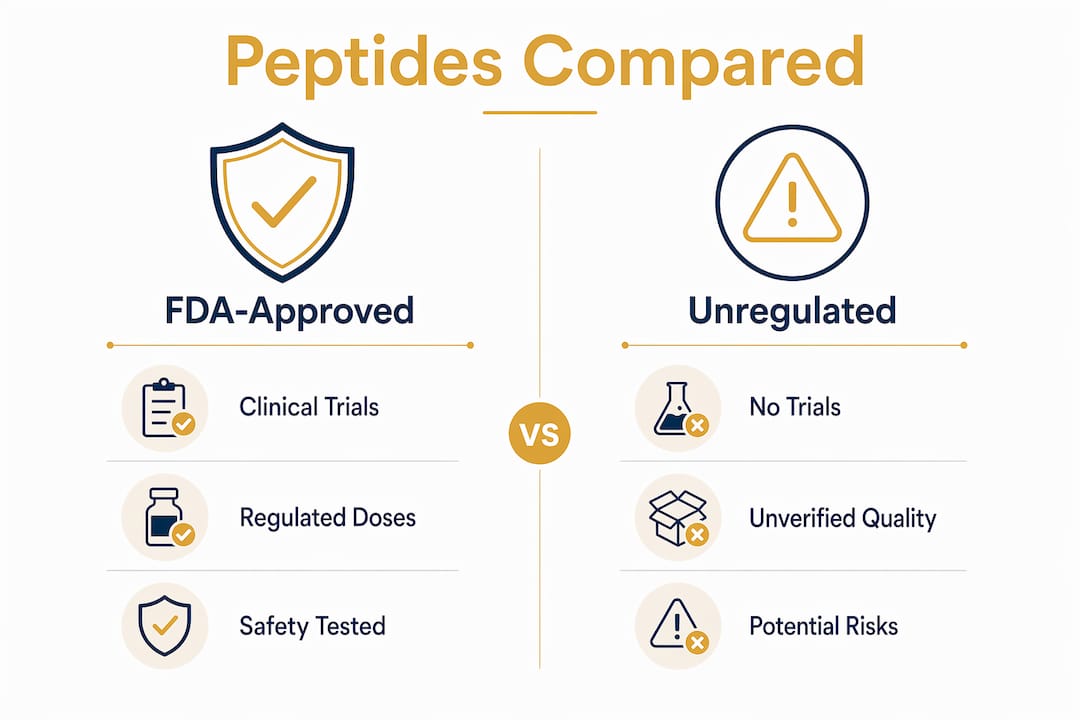
Popular peptide wellness claims lack human clinical evidence, and the protocols people follow are largely improvised from online forums. That means you are self-experimenting with an unverified compound at an unverified dose, with no physician monitoring your response. The risks include infection at the injection site, hormonal disruption, and unknown long-term effects.
FDA-approved peptides like semaglutide and liraglutide went through years of clinical trials before reaching patients. Liraglutide is administered as a daily injection, while semaglutide and tirzepatide are weekly injections. Each has a defined dosing schedule, a known side effect profile, and clear patient-selection criteria. The AMA's guidance is direct: clinically meaningful weight loss from peptides is almost entirely limited to FDA-approved GLP-1 or dual-agonist drugs.
Pro Tip: Before purchasing any injectable peptide product online, check the types of weight loss medications guide to understand which treatments have regulatory approval and which do not.
What to expect during peptide weight loss treatment
Starting peptide therapy for fat loss is not a single event. It is a structured medical process that unfolds over months. Here is what a typical treatment plan looks like:
- Initial assessment. A physician evaluates your BMI, metabolic health, existing conditions, and medication history before prescribing. Semaglutide and liraglutide are approved for adults with a BMI of 30 or higher, or 27 or higher with a weight-related condition such as type 2 diabetes or hypertension.
- Dose titration. Treatment begins at a low dose and increases gradually over several weeks. This titration process is the primary tool for managing gastrointestinal side effects like nausea, vomiting, and diarrhea. Rushing the dose escalation is the most common reason patients discontinue early.
- Lifestyle integration. Peptide therapy works best alongside a reduced-calorie diet and regular physical activity. The clinical trials that produced 14 to 17% weight loss results all included behavioral intervention components. The drug amplifies the effect of lifestyle changes rather than replacing them.
- Ongoing monitoring. A physician tracks your weight, blood pressure, heart rate, and any side effects at regular intervals. Ongoing clinical oversight is required to balance the benefits of continued treatment against any emerging risks.
- Long-term planning. The STEP 5 trial showed semaglutide sustained roughly 15% weight loss over 104 weeks with behavioral support. Stopping the medication without a maintenance plan typically leads to weight regain, which means most patients need to treat obesity as a chronic condition rather than a short-term problem to solve.
Side effects are real and worth understanding before you start. Nausea is the most common, affecting a significant portion of patients during the first few weeks of treatment. Most people find it manageable once the dose is properly titrated. Constipation, fatigue, and mild headaches are also reported. Serious side effects, including pancreatitis and thyroid concerns, are rare but require immediate medical attention if symptoms appear.
Emerging peptide therapies and what's coming next
The next generation of weight loss peptides goes beyond dual agonists. Retatrutide is a tri-agonist that targets GLP-1, GIP, and glucagon receptors simultaneously. In early-phase trials, it produced approximately 22% average weight loss at 48 weeks. That figure is higher than any currently approved drug and suggests the ceiling for peptide-based weight loss has not yet been reached.
| Peptide | Receptor targets | Average weight loss | Status |
|---|---|---|---|
| Semaglutide (Wegovy) | GLP-1 | ~14.9% at 68 weeks | FDA-approved |
| Tirzepatide (Zepbound) | GLP-1 + GIP | ~17.8% at 72 weeks | FDA-approved |
| Retatrutide | GLP-1 + GIP + glucagon | ~22% at 48 weeks | Experimental |
Combination therapies pairing GLP-1 agonists with amylin analogs or other satiety hormones are also in active development. The goal is to engage multiple appetite and metabolic pathways at once, reducing the dose of each individual compound while maintaining or improving efficacy. For patients who do not respond adequately to current approved options, these combinations may offer a meaningful alternative within the next several years.
The current evidence base is still limited to early-phase trials for most of these newer compounds. Retatrutide is not commercially available, and its long-term safety profile is not yet established. What this means practically is that semaglutide and tirzepatide remain the standard of care for now, while the pipeline suggests better options are coming. Staying connected to a physician who follows this research is the most reliable way to access new treatments as they receive approval. You can explore the role of peptides in aging and metabolic health for a broader view of where peptide science is heading.
Key takeaways
Peptide weight loss is a medically supervised therapy built on FDA-approved GLP-1 receptor agonists, not a supplement category, and clinical results depend on proper dosing, physician oversight, and sustained lifestyle changes.
| Point | Details |
|---|---|
| FDA-approved drugs lead the field | Semaglutide, liraglutide, and tirzepatide have the strongest clinical evidence for weight loss. |
| Mechanism drives results | GLP-1 peptides reduce appetite, delay gastric emptying, and stabilize blood sugar simultaneously. |
| Grey-market peptides carry real risk | Unregulated products lack quality control, dosing accuracy, and human trial evidence. |
| Treatment is long-term | Stopping peptide therapy without a plan typically causes weight regain; chronic management is the standard. |
| Next-generation options are coming | Retatrutide and combination therapies show higher weight loss percentages in early trials. |
Why the peptide conversation needs more precision
I've spent years watching the peptide category get muddier, not clearer. Every month, a new compound appears on wellness forums with breathless claims and zero human data behind it. Patients come in having already purchased injectable peptides online, convinced they are doing the same thing as someone prescribed Wegovy by a physician. They are not.
The distinction that matters most is this: GLP-1 receptor agonists like semaglutide and tirzepatide are drugs. They were developed, tested, and approved through a rigorous process that took over a decade. The peptides sold on grey-market websites are, at best, research compounds with animal data. At worst, they are mislabeled products with no active ingredient at the stated dose.
What I find most frustrating is the framing of peptide therapy as a quick fix. The clinical trials that produced those impressive weight loss numbers all ran for 68 weeks or longer. The patients in those trials had physician oversight, structured behavioral support, and carefully titrated doses. Replicating those results without that infrastructure is not realistic.
If you are serious about using peptide therapy for fat loss, the path is straightforward. Get a proper assessment, work with a licensed physician, use an FDA-approved drug, and commit to the lifestyle changes that make the medication work. That is not a complicated message, but it gets lost in the noise of the broader peptide wellness market.
— Roosevelt
Start your peptide therapy with medical supervision
If you've read this far, you already know that the benefits of peptide weight loss depend entirely on using the right medication under proper clinical oversight.

Grownupmeds connects you with licensed physicians who specialize in physician-supervised peptide therapy for weight management. The platform handles your assessment, connects you with a clinician, and coordinates delivery of FDA-approved medications from US-based pharmacies. There are no guesswork protocols or grey-market products. Every treatment plan is personalized, monitored, and built on the same clinical evidence discussed in this article. If you are ready to explore medically supervised options, Grownupmeds is where that conversation starts.
FAQ
What is peptide weight loss in simple terms?
Peptide weight loss refers to using FDA-approved peptide medications, specifically GLP-1 receptor agonists like semaglutide and tirzepatide, to reduce body weight by suppressing appetite and improving metabolic function. These are prescription drugs, not supplements.
How do peptides help with weight loss?
GLP-1 peptides work by activating receptors in the brain that reduce hunger, slowing digestion to extend fullness, and stabilizing blood sugar to reduce cravings. The combined effect produces weight loss that exceeds what diet and exercise alone typically achieve.
Are peptide supplements for weight loss the same as prescription peptides?
No. Over-the-counter peptide supplements are not the same as FDA-approved GLP-1 drugs. Prescription peptides like semaglutide have large-scale clinical trial evidence; most peptide supplements sold online have no human trial data and no regulatory oversight.
How long does peptide therapy for fat loss take to work?
Most patients see meaningful weight loss within 12 to 16 weeks of reaching their therapeutic dose, with peak results typically seen at 68 to 72 weeks based on STEP and SURMOUNT trial data. Results depend on dose adherence, lifestyle changes, and physician monitoring.
What happens if you stop peptide weight loss treatment?
Stopping GLP-1 peptide therapy without a maintenance plan typically leads to weight regain, because the medication's appetite-suppressing effects end when the drug clears the body. Physicians at platforms like Grownupmeds help patients plan transitions to reduce this risk.