More than 40% of U.S. adults currently have obesity, yet most weight loss attempts happen without any clinical input. That gap matters more than most people realize. Defining medically supervised weight loss is not just a technical exercise. It is the starting point for understanding why some people finally succeed after years of frustration. This article breaks down what these programs actually involve, who qualifies, what the clinical evidence shows, and how you can find the right path forward with the guidance of licensed healthcare professionals.
Table of Contents
Key takeaways
| Point | Details |
|---|---|
| Medical supervision is structured | Programs involve licensed physicians, dietitians, and counselors working as a coordinated team. |
| Clinical thresholds guide entry | Patients typically qualify after failing to reach 5% weight loss in 3 to 6 months of lifestyle intervention. |
| Multimodal care drives results | Combining medication, behavioral support, and diet outperforms any single approach on its own. |
| Telehealth expands access | Physician-supervised programs are now available without requiring in-person clinic visits. |
| Long-term commitment is required | Sustainable weight loss demands ongoing monitoring and adaptation, not a fixed-length program. |
Defining medically supervised weight loss
At its core, medically supervised weight loss is a structured, evidence-based program designed and overseen by licensed healthcare professionals. It goes well beyond a meal plan or a step counter. These programs are built around your specific physiology, medical history, and metabolic profile, with the goal of producing safe, lasting results rather than a short-term number on a scale.
So what is medically supervised weight loss in clinical terms? Most formal programs are triggered by specific thresholds. Medical supervision is initiated when a patient has not achieved at least 5% weight loss after three to six months of intensive lifestyle intervention. BMI is another gateway criterion. Patients with a BMI of 30 or above, or a BMI of 27 or above with a related health condition such as type 2 diabetes or hypertension, are typically eligible.
The healthcare team behind these programs is one of the defining features. A genuinely supervised program includes:
-
A physician or licensed medical provider who directs the clinical strategy, orders labs, prescribes medications when appropriate, and monitors overall safety
-
A registered dietitian who builds a calorie and nutrient structure personalized to your metabolic needs
-
A behavioral counselor or psychologist who addresses the psychological patterns driving overeating or inactivity
-
A nurse or medical assistant who tracks biometrics, flags side effects, and maintains continuity between visits
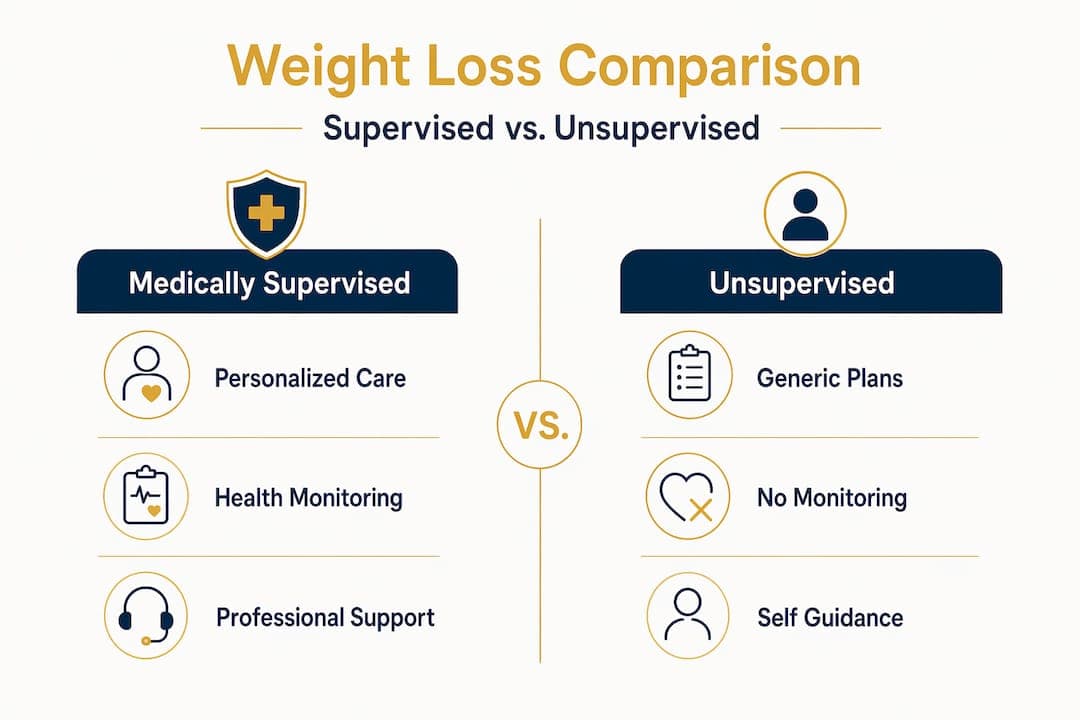
This is what separates a medical weight loss program from a commercial diet. Commercial programs like calorie-counting apps or group diet plans may provide structure, but they do not include body composition analysis, lab testing, or the ability to prescribe and monitor medications. When a physician is involved, your program can be adjusted in real time based on how your body is actually responding.
What a real program looks like
The multimodal nature of these programs is the reason they work where solo attempts fail. Successful weight management requires a coordinated team that addresses medical, nutritional, psychological, and physical factors together. Strip out any one of those layers and the results tend to deteriorate.
Here is what most programs include in practice:
-
A tailored nutrition plan: This is not a generic low-calorie diet. Very low-calorie diets, which fall below 800 calories daily, can achieve 15 to 20 kg of loss in 12 to 16 weeks but require direct medical oversight to prevent nutritional deficiencies. Standard low-calorie protocols typically yield 0.5 to 1 kg per week and are used when a slower, steadier approach fits better.
-
Physical activity guidance: Exercise prescriptions are built around your current fitness level, any joint or cardiovascular limitations, and your realistic schedule.
-
Pharmacotherapy: GLP-1 receptor agonists have become a central tool in many programs. They reduce appetite, slow gastric emptying, and support significant weight reduction. But GLP-1 medications alone are not the gold standard. The best outcomes come from pairing them with behavioral coaching and nutritional guidance. You can review how Grownupmeds approaches this at their GLP-1 program page.
-
Behavioral support: Sustainable habits require rewiring thought patterns around food, stress, and reward. Behavioral counselors work on identifying triggers, building coping strategies, and preventing relapse after progress is made.
-
Ongoing clinical monitoring: Labs, vitals, and body composition data are reviewed regularly so the plan can be adjusted before a problem escalates.
Pro Tip: If a program gives you a plan on day one and checks in only monthly, that is not real supervision. Look for programs that track objective data, adjust medications when needed, and offer access to a clinical contact between appointments.
One point worth knowing: rapid weight loss under supervision can be both safe and effective when properly monitored. The key is preserving muscle mass while reducing fat. Physician-supervised protocols that include protein targets and regular body composition checks are designed specifically to do that.

Benefits of supervised vs. unsupervised weight loss
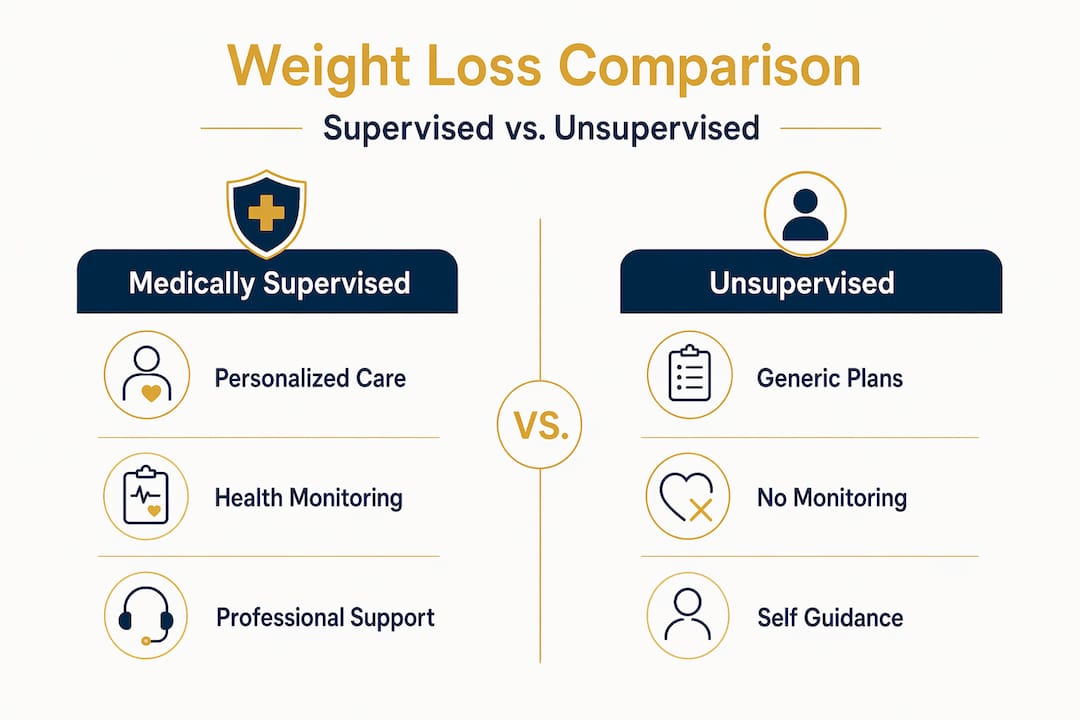
The difference in weight loss programs becomes most visible when you compare outcomes over time. Unsupervised methods often produce early results, but they rarely hold. The reason is biological. Obesity is a chronic, relapsing disease with physiological set points that actively defend against weight loss. Your body interprets calorie restriction as a threat and compensates by lowering metabolism, increasing hunger hormones, and reducing energy expenditure.
| Factor | Medically supervised | Unsupervised |
|---|---|---|
| Personalization | High, based on labs and metrics | Low, based on general guidelines |
| Medication access | Yes, when clinically appropriate | No |
| Safety monitoring | Ongoing by clinical team | None |
| Behavioral support | Structured and professional | Self-directed |
| Long-term maintenance | Supported with follow-up plans | Typically ends with program |
| Complication management | Immediate clinical response | Delayed or absent |
Beyond the structural advantages, medical weight loss focuses on overall health improvements, not just the number on the scale. Blood pressure, blood glucose, cholesterol, and inflammatory markers are all tracked and treated as part of the outcome picture. That approach produces results that actually change your health trajectory, not just your pants size.
Professional accountability is also a real factor. When you have scheduled appointments, a team reviewing your data, and a physician who knows your history, you are far less likely to abandon the process during a hard week.
How to know if this is right for you
Eligibility for a supervised weight loss program is clearer than most people expect. You likely qualify if you meet one or more of these criteria:
-
Your BMI is 30 or above, regardless of other health conditions
-
Your BMI is 27 or above and you have a related condition such as sleep apnea, type 2 diabetes, or high blood pressure
-
You have made a genuine effort to lose weight through lifestyle changes over the past three to six months without reaching the 5% threshold
-
You have a history of weight regain after prior loss attempts
Your first appointment at a supervised weight loss clinic will typically include a full medical history review, physical examination, blood work to assess thyroid function, metabolic rate, blood glucose and lipids, and body composition measurements. That data becomes the foundation of your personalized plan.
Program structure varies, but most supervised programs include weekly or biweekly check-ins early on, transitioning to monthly visits as you stabilize. Long-term maintenance support is a marker of quality. Be cautious of programs that discharge you after the weight comes off.
On the insurance side, Medicare covers Intensive Behavioral Therapy for obesity under strict criteria including session frequency, method standards, and documentation requirements. Private insurance coverage varies. The key to coverage approval is documentation. Your physician must record your diagnosis using the ICD-10 E66 obesity code and provide a detailed prior intervention history showing that lifestyle methods were tried and insufficient.
Telehealth has significantly expanded who can access these programs. Physician-supervised telehealth protocols now allow patients in rural areas or those with limited mobility to receive the same quality of clinical oversight as patients in major cities. Lab work is done at a local draw site, medications ship directly to your door, and consultations happen via video.
Pro Tip: Before your first consultation, compile a list of every weight loss method you have tried, including duration and approximate results. That history accelerates the clinical assessment and strengthens your insurance documentation if needed.
My perspective on what actually changes outcomes
I have followed this space long enough to say something that most generic content avoids: the majority of people who struggle with weight are not failing because of willpower. They are failing because they are fighting a chronic disease with consumer tools. That framing shift matters.
What I have seen consistently is that the behavioral component gets underestimated. Patients focus on the diet, they get excited about the medication, and they gloss over the counseling. But the counseling is often what determines whether the loss holds at the 18-month mark. The medication gets you moving in the right direction. The behavioral work determines whether you stay there.
GLP-1 medications are genuinely useful, and their rise has helped a lot of people access meaningful results faster than they expected. But I am skeptical of any approach that treats them as the whole solution. The research is clear that combining medication with coaching produces better outcomes than medication alone. That is not a minor footnote. It is the difference between temporary and lasting.
What long-term success actually requires is honest: sustained commitment, willingness to adjust the plan when your body changes, and a clinical team that stays engaged after the initial loss phase. The patients who maintain their results are not the ones who followed the strictest protocol. They are the ones who stayed in the system long enough to make the new behaviors automatic. You can find practical tools for that phase through long-term success strategies that go beyond the basics.
— Roosevelt
Ready to take a medically supervised approach?
If you have been reading this and recognizing your own experience in the pattern of failed attempts and frustrating plateaus, you are not alone and you are not broken. The issue is usually the absence of proper clinical support.

Grownupmeds is a physician-supervised telehealth platform built for adults who are ready for a structured, science-backed approach to weight management. Through a personalized health assessment, their licensed physicians evaluate your metabolic profile, medical history, and goals to build a treatment plan that fits you specifically. Services include GLP-1 therapy, peptide support, hormone optimization, and ongoing clinical monitoring. For men exploring weight loss alongside vitality and body composition goals, the men’s health program offers a focused pathway. Medications are dispensed from U.S.-based pharmacies, consultations happen on your schedule, and your care team stays actively involved throughout the process.
FAQ
What does medically supervised weight loss mean?
Medically supervised weight loss is a structured program overseen by licensed physicians and healthcare professionals that combines personalized nutrition, physical activity, behavioral support, and clinical monitoring to produce safe and lasting results.
Who qualifies for a medical weight loss program?
Adults with a BMI of 30 or above, or a BMI of 27 or above with a related health condition, typically qualify. Prior unsuccessful attempts at lifestyle-based weight loss also support eligibility.
How is this different from a regular diet plan?
A supervised program includes physician oversight, lab-based personalization, access to prescription medications, and ongoing safety monitoring. Standard diet plans offer general guidance without any of that clinical infrastructure.
Are GLP-1 medications part of medically supervised programs?
Yes, when clinically appropriate. GLP-1 receptor agonists are used within supervised programs, but the evidence strongly supports combining them with behavioral and nutritional support rather than relying on medication alone.
Does insurance cover medically supervised weight loss?
Coverage depends on the insurer and program type. Medicare covers Intensive Behavioral Therapy for obesity under specific criteria. Proper ICD-10 documentation and proof of prior lifestyle intervention history are typically required for approval.