
Science-backed protocols are evidence-based, systematically tested methods designed to improve health outcomes by integrating rigorous research with clinical judgment and individual patient needs. For health-conscious adults pursuing wellness, longevity, and metabolic health, the difference between a protocol grounded in peer-reviewed data and one built on anecdote is the difference between measurable progress and wasted effort. The U.S. POINTER trial, Les Mills research programs, and the Merck Manual's evidence-based medicine framework all demonstrate why science-driven strategies consistently outperform unstructured approaches. This article explains what these protocols are, why they work, where they fall short, and how to choose ones you can actually trust.
Why science-backed protocols outperform anecdotal approaches
Evidence-based medicine (EBM) is the formal framework behind every credible science-backed protocol. The Merck Manual defines EBM as a structured process that integrates the best available research evidence, clinical expertise, and patient preferences to guide health decisions. That three-part combination is what separates a genuine evidence-supported protocol from a product that simply sounds scientific.
The hierarchy of evidence matters here. Systematic reviews and meta-analyses sit at the top, followed by randomized controlled trials (RCTs), cohort studies, and expert opinion at the bottom. A protocol built on a single expert's recommendation carries far less weight than one validated across multiple RCTs. History proves this point sharply. A landmark Korean War trial disproved the long-held belief that strict bedrest accelerated recovery, showing no benefit over active recovery. That single trial helped shift modern medicine toward RCT-based clinical decisions.

The distinction between science-backed and merely "science-sounding" is equally important. Many wellness products cite one small study or use vague language like "clinically inspired" without linking to reproducible data. Credible protocols, by contrast, go through testing cycles, peer review, and iteration before reaching patients.
Here is what separates a genuine evidence-based protocol from a marketing claim:
- Transparent methodology: The testing process, sample sizes, and outcomes are publicly documented.
- Reproducibility: Results hold across independent studies and diverse populations.
- Iteration: Protocols are updated as new evidence emerges, not frozen at launch.
- Clinical integration: Findings are filtered through licensed clinicians who adapt them to individual patient contexts.
- Patient preference alignment: The best protocols account for individual goals, tolerances, and circumstances.
Pro Tip: When evaluating any health protocol, search for the primary citation it references. If the study used fewer than 50 participants or was never peer-reviewed, treat the protocol's claims with caution regardless of how authoritative the language sounds.
What are the real benefits of evidence-based health protocols?
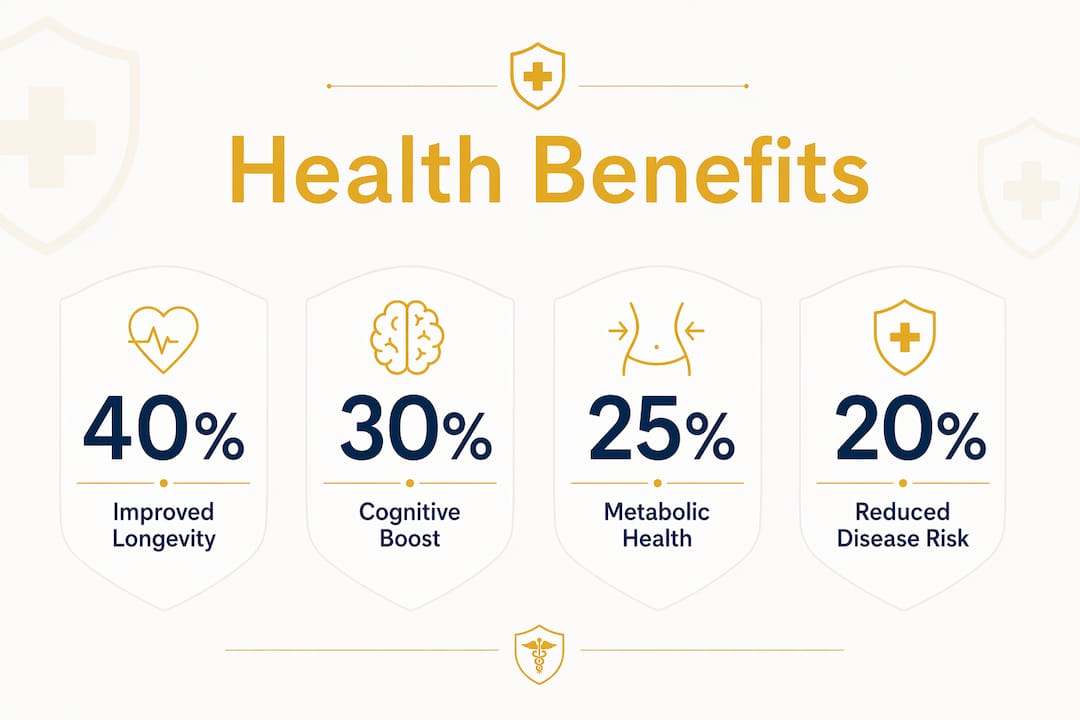
The advantages of following science-based methods go well beyond having a structured plan. The data shows concrete, measurable improvements across multiple health domains when people follow rigorously tested protocols compared to self-guided efforts.
The POINTER trial is one of the most compelling recent examples. In a study of 2,111 adults aged 60 to 79, participants who followed a structured, guided lifestyle intervention experienced greater reductions in biological frailty and stronger cognitive performance gains than those using a self-guided approach. This finding matters because it confirms that the structure itself, not just the individual behaviors, drives better outcomes. Accountability, sequencing, and professional oversight compound the benefits in ways that solo efforts rarely replicate.
Les Mills, the global fitness program developer, offers another instructive example. Their head of research describes ongoing university partnerships and continuous protocol testing designed to maximize workout efficacy while minimizing injury risk. Every program update goes through an iteration cycle before release. That process is what makes their protocols safer and more effective than generic workout plans assembled without systematic testing.
The benefits of evidence-supported techniques stack up across four key dimensions:
- Reduced risk of harm. Protocols tested through RCTs identify adverse effects before they reach the general public, giving you a safety margin that anecdotal recommendations cannot provide.
- Higher probability of meaningful outcomes. Structured programs with documented efficacy data give you a realistic expectation of results, not just a hopeful one.
- Multi-domain improvements. Clinical trial data consistently shows that well-designed protocols produce benefits across interconnected systems, such as metabolic health, cognitive function, and physical resilience, simultaneously.
- Accountability built in. Physician-supervised or clinician-guided protocols include monitoring checkpoints that catch problems early and adjust the approach before adherence breaks down.
"Structured lifestyle interventions produce benefits through multiple biological pathways, not just the single metric they were designed to improve." — Neuroscience News, reporting on the POINTER trial findings
For adults focused on metabolic health strategies, this multi-pathway effect is particularly relevant. Improving insulin sensitivity, for example, also influences energy levels, body composition, and cognitive clarity. A protocol that targets one marker often moves several others in the right direction.
What are the real limitations of science-backed protocols?
No protocol is immune to real-world friction, and understanding where evidence-based approaches fall short makes you a smarter consumer of them.
Adherence is the most consistent failure point. A long-term study tracking breast cancer treatment guidelines found that adherence dropped from 82.2% to 70.1% between 1992 and 2011, even as the guidelines themselves improved. The evidence got better; the follow-through got worse. This pattern appears across virtually every clinical domain and reflects a fundamental gap between what protocols prescribe and what patients actually do over time.
The second limitation is population mismatch. Clinical trials recruit specific participant groups, often younger, healthier, or more motivated than the average person seeking treatment. When a protocol developed in a controlled trial reaches a broader, more diverse population, its effectiveness can drop significantly. Protocol order and sequencing also affect outcomes in ways that trial designs sometimes fail to capture, meaning a protocol that works in one sequence may underperform when steps are reordered or skipped.
The third limitation is the "science-backed" label itself. A 2026 systematic review found that only 6.6% of health communication recommendations include relevant evidence citations. That figure means the vast majority of guidance labeled as evidence-based in primary care communication lacks direct scientific support. The label is not a guarantee.
| Limitation | What it means for you |
|---|---|
| Adherence decline over time | Even the best protocol fails without consistent follow-through and monitoring checkpoints |
| Population mismatch | Trial results may not translate directly to your age, health status, or lifestyle |
| Weak citation support | Many "science-backed" claims reference indirect or low-quality evidence |
| Sequencing gaps | Protocol steps taken out of order can reduce effectiveness or increase risk |
Pro Tip: Ask any protocol provider to show you the specific studies supporting their recommendations. If they cite a systematic review or RCT with a sample size above 500, that is a strong signal. If they point to a single observational study or a white paper they funded themselves, dig deeper before committing.
How to evaluate and choose trustworthy health protocols
Choosing a credible protocol requires more than reading a product page. The criteria below apply whether you are evaluating a fitness program, a telehealth treatment plan, or a nutritional intervention.
Start with transparency about testing. Les Mills publishes its research partnerships and testing methodology openly. Physician-supervised telehealth platforms that follow rigorous protocol development similarly document their clinical review processes. If a provider cannot explain how their protocol was developed and tested, that absence of transparency is itself a red flag.
Next, assess whether the protocol individualizes its approach. Research published in JMIR Mental Health confirms that behavior change outcomes depend on strategic selection and personalization of techniques, not on layering as many interventions as possible. A protocol that applies the same exact plan to every user regardless of baseline health, age, or goals is not applying evidence-based medicine. It is applying a template.
Verify the citations directly. Do not assume that a reference list means every claim is supported. Check whether the cited study actually tests the specific intervention being recommended, uses a relevant population, and was published in a peer-reviewed journal. A weight management protocol grounded in RCT data looks very different from one citing a single pilot study.
Finally, build in ongoing monitoring. The value of a science-backed protocol compounds when you track your response to it over time. Tools and frameworks for tracking health progress let you identify whether a protocol is working for your specific biology, not just for the average trial participant. Adjustments based on your own data are how evidence-based medicine is supposed to work in practice.
Key takeaways
Science-backed protocols deliver superior health outcomes because they combine peer-reviewed evidence, clinical oversight, and individualized application, three elements that anecdotal or self-guided approaches consistently lack.
| Point | Details |
|---|---|
| EBM is the foundation | Credible protocols use systematic reviews and RCTs, not single studies or expert opinion alone. |
| Structure drives results | The POINTER trial showed structured programs outperform self-guided efforts across aging and cognition markers. |
| Adherence is the weak link | Real-world protocol adherence drops over time, making physician supervision and monitoring critical. |
| Labels require verification | Only 6.6% of health communication recommendations include relevant evidence citations, so verify claims directly. |
| Personalization amplifies effectiveness | Individualizing behavior change techniques produces better outcomes than applying a one-size-fits-all protocol. |
The uncomfortable truth about "evidence-based" health advice
I have spent years reading clinical research and watching how protocols translate from trial conditions into real people's lives. The gap is wider than most health content acknowledges.
The most important thing I have learned is that evidence-based medicine is not a destination. It is a discipline. The Merck Manual's framework is explicit: EBM requires balancing the best research with clinical judgment and patient preferences. That third element, patient preference, is the one most wellness platforms quietly drop. They present a protocol as if following it precisely is the only correct path, when the actual science says personalization is what makes it work.
I am also skeptical of any protocol that has not been updated recently. Evidence evolves. A program built on 2015 research and never revised is not science-backed. It is science-inspired at best. The Les Mills model of continuous testing and iteration is the standard every credible protocol should meet, not the exception.
What I tell anyone serious about health optimization is this: find a protocol with documented testing, a clinician who will adapt it to your specific situation, and a monitoring system that catches problems early. That combination is what the research actually supports. Everything else is a shortcut that the data does not endorse.
— Roosevelt
How Grownupmeds puts science-backed protocols to work for you
Grownupmeds is built on the principle that every treatment plan should be grounded in clinical evidence and supervised by a licensed physician. The platform connects health-conscious adults with physician-supervised peptide therapy and NAD therapy protocols designed to support metabolic health, cellular recovery, and longevity. Each protocol is personalized through a structured assessment process, not applied as a generic template. If you are ready to move from guesswork to a clinician-reviewed plan built around your specific health goals, start with a personalized health assessment and see which evidence-supported options fit your biology and objectives.
FAQ
What makes a health protocol "science-backed"?
A science-backed protocol is built on peer-reviewed evidence, typically from RCTs or systematic reviews, and is validated through testing before clinical use. The Merck Manual defines this process as evidence-based medicine, which also integrates clinical judgment and patient preferences.
Are science-backed protocols always safe?
Rigorous testing significantly reduces risk, but no protocol is universally safe for every individual. Physician supervision and ongoing monitoring are what translate population-level safety data into safety for your specific health profile.
Why do some people not get results from evidence-based protocols?
Adherence decline and population mismatch are the two most common reasons. Research on breast cancer treatment guidelines found adherence dropped nearly 12 percentage points over two decades, showing that even well-designed protocols fail without consistent follow-through and individualized adjustments.
How can I tell if a "science-backed" claim is legitimate?
Check whether the provider cites specific peer-reviewed studies, not just general references to "research." A 2026 systematic review found only 6.6% of health communication recommendations include relevant evidence citations, so verifying the actual source is a necessary step.
Does protocol order matter for health outcomes?
Yes. Clinical sequencing research shows that the order in which protocol steps are applied affects both effectiveness and safety. A well-designed protocol specifies not just what to do, but when and in what sequence to do it.